Proper CPAP pillow cleaning starts with understanding your bedding’s anatomy and what its component labels actually permit. Because a contoured bed pillow differs entirely from silicone mask cushions or electronic machinery, checking each structural layer against specific maker guidelines prevents costly mistakes during CPAP pillow cleaning. A removable outer case being washable does not automatically establish permission to wet or wash its interior foam. This article is categorized under our CPAP & Sleep Section.
| Component | Where to Check Instructions | What Not to Assume |
|---|---|---|
| Outer cover | Sewn-in tag, zipper flap, or packaging | Do not assume inner layers share the same washability |
| Inner fabric liner | Manufacturer product insert or PDF manual | Do not assume a protective lining means the core is waterproof |
| Foam or inserts | Brand documentation or customer support | Do not assume unlabelled foam can handle water immersion |
Rune & Horn selected the Elviros Dark Grey memory foam pillow as a promotional product example to illustrate structural differences during CPAP pillow cleaning; please note this is not a hands-on review. Its catalog notes machine-washable pillowcases while a generic overview mentions laundering without isolating specific parts. A linked Cervical Memory Foam Pillow PDF manual explicitly notes not to wash the foam core, though it prints no ASIN, version, or date, meaning we cannot confirm it matches every variant.
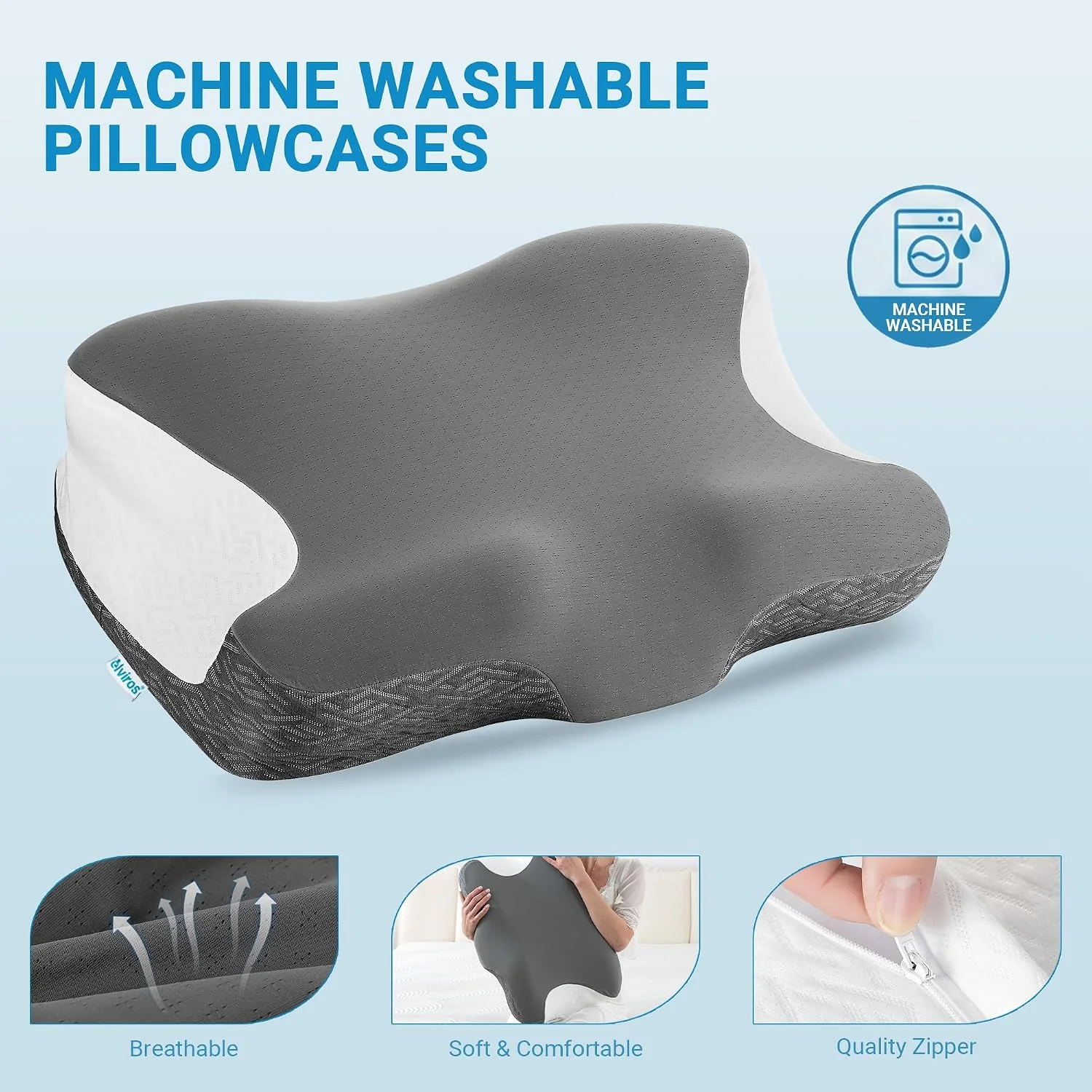
Table of Contents
Table of Contents
1. Identify your bedding components
Start your CPAP pillow cleaning process by clearly identifying the physical item in your hands. A specialized CPAP pillow provides structural support and contour channels, which require entirely different maintenance than medical tubing or machine components. Inspecting your pillow’s physical construction first ensures you treat it as standard home bedding during CPAP pillow cleaning rather than assuming equipment care directions apply.
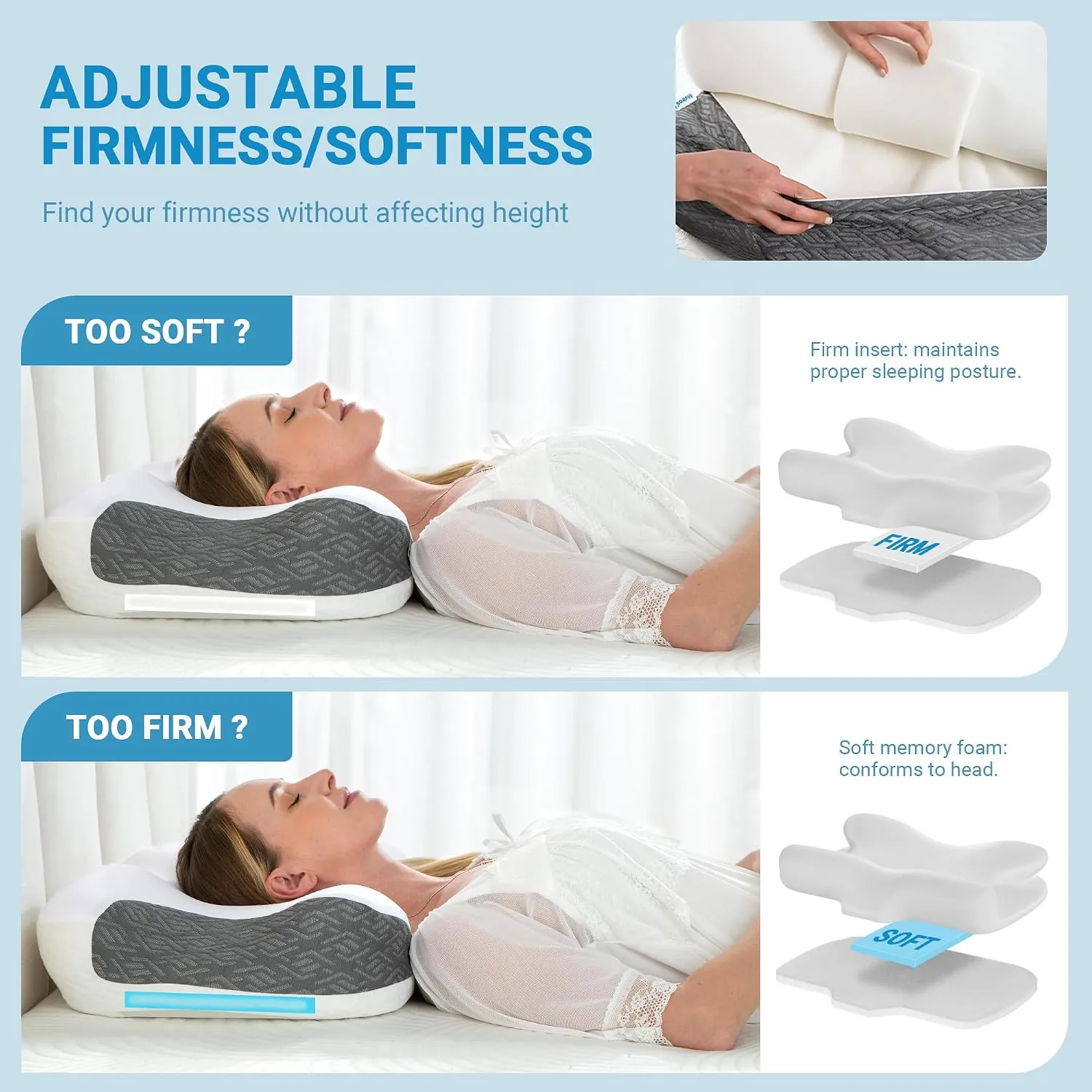
Take a moment to carefully examine the pillow’s individual construction before starting any CPAP pillow cleaning. If your own product instructions authorize removing the outer cover, unzip the main opening to see whether you have a single zippered shell over raw foam or if a secondary fabric sleeve sits inside. Never assume every model contains three distinct layers; simply identify the exact components present in your specific model.
Consider a practical example: you unzip the main cover and spot a thin, white woven layer underneath. Spotting that second zipper or enclosed seam does not grant permission to open every layer or toss the inner lining into the laundry. Treat that secondary fabric sleeve as a separate component requiring its own care check, rather than assuming it shares the outer cover’s laundry instructions.
Match each visible part to its corresponding care label or documentation rather than relying on general equipment directions. If a specific component lacks clear care instructions, contact the maker directly to request the missing details before taking further action.
2. Match documentation to your exact item
Confirming that your care instructions match the exact item on your nightstand is an essential step in safe CPAP pillow cleaning. Different production runs may feature varying specifications. Reviewing your specific product labels directly helps you verify which rules apply to your exact item.
Before proceeding with CPAP pillow cleaning, compare your physical pillow’s sewn tag against your receipt and documentation. For instance, the linked Elviros PDF guide lacks a printed ASIN, version number, or release date; while linked directly on the product listing, that document cannot be assumed to cover every past or future variation. If your physical item features a navy velvet shell but the guide depicts a white mesh cover, pause before washing.
Ask yourself three concrete questions before taking action on any bedding piece: Does the tag text match the manual title? Does the visual layout reflect your item’s zipper placement? Is the listed cover material identical to what you hold? Evaluating these points prevents applying improper care to an unlisted variation.
When cross-referencing your purchase options, consulting resources like our CPAP pillow comparison guide can help you trace how different specifications impact care needs. If any label detail conflicts with your documentation, contact the maker for exact instructions rather than guessing.
3. Open only documented removable covers
Carefully separating the outer fabric from the core is the next phase of proper CPAP pillow cleaning. Begin by locating the specific opening described in your product’s user manual or sewn-in tag. Take time to check for any documented fasteners, such as hidden zippers, press snaps, or fabric flaps, before attempting to pull the removable CPAP pillow cover free from the interior bedding structure.
Proceed gently when opening any fasteners to avoid placing unnecessary stress on the surrounding stitching or internal materials. If you encounter resistance while gliding a zipper slider, stop immediately rather than forcing it forward. Check whether the slider has caught on an inner fabric lip or caught against a portion of the foam before trying to clear the fabric path.
Never force an opening or tear open seams if an inner sleeve is not explicitly documented as removable during CPAP pillow cleaning. Some pillow designs integrate internal linings that are meant to stay permanently over the core. Assuming every internal zip or seam is designed for home disassembly can result in torn linings or exposed foam edges that are difficult to reassemble.
If you are unsure whether a specific layer is intended to come apart, contact the maker to clarify component removability for your exact model. Ask directly: “Is the inner sleeve designed to be unzipped and removed, or should it remain permanently around the core?” Taking a moment to verify prevents unnecessary handling issues during CPAP pillow cleaning.
4. Apply instructions to the outer cover
Navigating safe CPAP pillow cleaning requires separating what applies to the removable outer shell from what applies to the rest of the bedding assembly. Before putting anything into the laundry, confirm that the care tag you are reading is physically stitched into the outer cover itself. Labels attached to inner fabric linings or packaged separately may outline completely different care instructions meant solely for those specific layers.
Locate the manufacturer’s written wash and dry guidelines for the outer fabric before proceeding with CPAP pillow cleaning. An online product summary stating “Machine Wash” across a main bullet point does not mean the entire pillow can go into a washing machine. Such broad product descriptions may refer exclusively to the external slipcase, leaving the internal padding subject to separate handling rules.
Distinguishing between the outer cover’s tag and an inner liner’s label prevents accidental laundry missteps. If you find one legible tag on the outer zipper seam but notice a faded or missing symbol on the inner sleeve, treat them as two distinct sets of rules. Never apply the readable instructions of the outer fabric to an unlabeled interior component.
If care symbols are missing, blurred, or unclear, request component-specific details directly from the manufacturer instead of guessing a routine. Ask specifically: “What are the exact wash and dry instructions for the outer cover alone?” Getting explicit confirmation for that isolated piece keeps your CPAP pillow cleaning routine aligned with what the maker intended.
5. Exclude foam from the laundry
The most important boundary in CPAP pillow cleaning is keeping internal foam entirely separate from your fabric laundering. The generic manual linked on the product page states: “Don’t wash the memory foam core.” That same Cervical Memory Foam Pillow PDF guide also directs users to keep the core out of direct sunlight and away from vents.
Removability must never be confused with washability. If your pillow features removable foam inserts or adjustable layers, taking them out allows you to launder the outer fabric, but it does not mean those interior foam pieces can join the wash. Every insert requires its own verification before exposure to water or cleaning products.
Maintain a clear mental checklist while preparing your bedding components for laundry:
- Fabric cover: Laundering allowed only as specified on its own tag.
- Inner sleeve: Requires separate care verification before washing.
- Foam core: Excluded from washing, direct sun, and vents.
- Foam inserts: Requires independent care verification according to its own documentation.
Consider a practical example where someone unzips a pillow cover and considers washing the whole assembly together. Mixing these components leads to accidental laundering of non-washable parts. Always unmount and separate your documented removable outer cover and any other components that your own instructions explicitly allow before taking fabric to the wash.
If you are ever uncertain about how to care for the interior core itself, contact the manufacturer to request written care guidelines for that specific part. Maintaining this distinction keeps your CPAP pillow cleaning routine safe and properly organized.
6. Verify component drying and reassembly
Drying and reassembly require equal attention when wrapping up your routine CPAP pillow cleaning steps. The generic manual linked on the product page ends with the phrase “Tumble dry with low heat” without identifying which part of the pillow it covers. This isolated line in the Cervical Memory Foam Pillow PDF guide is not clear authorization to tumble-dry internal foam, nor is it specific enough to assign a drying setting to your CPAP pillow cover shell.
Before applying heat or placing any bedding component into a machine during CPAP pillow cleaning, check the specific care tag attached to that individual item. If the outer cover is washable according to its own label, follow the exact drying directions printed on that cover’s tag before refitting it over the core. Each physical layer must be dried according to its own documented rule set rather than a single generalized line at the end of a manual.
Because general manual statements may not explicitly distinguish between fabric covers and foam interiors, contacting customer support is a reliable path forward when instructions seem vague. When reaching out, ask a precise component question: “Does the tumble-dry instruction apply strictly to the removable cover, or are there separate drying rules for the inner sleeve and core?”
Once every component is completely dry according to its own instructions, align the internal core within the cover before zipping it closed. Make sure foam corners sit smoothly inside the seams without catching in the zipper track. Verifying these final steps keeps your CPAP pillow cleaning organized and properly executed from start to finish.
7. Request support when instructions are unclear
When care instructions are missing, contradictory, or an accidental spill occurs, reaching out directly to the seller or manufacturer can help clarify your CPAP pillow cleaning routine. Generic store pages may not always detail the distinct boundaries between washable covers and sensitive cores. Preparing clear, component-specific questions helps customer support provide an exact, usable answer.
Consider a practical example: a water glass spills onto your nightstand, soaking through the outer cover and into the interior padding. Instead of guessing a drying method or applying unverified household chemicals, compile a targeted message to the maker. Framing your situation around specific components helps you request clear guidance tailored to your exact product model.
When contacting support, adapt this question checklist for your message:
- Which specific product version or variant does your written care guidance apply to?
- Which exact component—outer cover, inner liner, or foam core—does each care instruction address?
- Does your machine-wash statement refer exclusively to the outer fabric shell?
- What is the official manufacturer guidance if liquid penetrates the interior foam core?
When contacting support, avoid posting sensitive account data publicly, though official support channels may request order reference details privately through secure messaging. Keeping your questions focused strictly on item construction protects your privacy while securing the necessary advice.
Having these component-specific details on hand clarifies how to execute CPAP pillow cleaning safely for every part of your pillow. Once you have verified instructions for each layer, managing your bedding maintenance becomes straightforward.
Frequently asked questions and product details
What if a generic online listing for CPAP pillow cleaning says “washable” without naming a specific part?
When an online storefront uses broad terms like “machine washable” across a main product banner, it may not clarify whether those instructions apply to the outer fabric, an inner liner, or the internal memory foam core. Assuming that a single general statement covers the entire item can easily lead to damaged components. Always inspect the physical sewn-in tags on each individual layer rather than relying on generalized marketing text. If the online description fails to separate the cover from the core, treat the instructions as incomplete and seek clarification directly from the maker.
How do an inner fabric liner and a foam insert differ, and do all models include them?
Pillow designs vary widely, meaning not every model contains three distinct layers. Some configurations feature a simple two-part build with a removable outer slipcase over a unified foam core, while others include a separate internal fabric sleeve or adjustable foam inserts. An inner fabric liner is a sewn textile sheath meant to protect or enclose the core, whereas foam inserts are modular pieces designed to adjust height. Inspect your specific bedding only if its instructions permit opening the outer cover.
What should I do if my physical product tag and manual disagree during CPAP pillow cleaning?
Conflicting guidance between a sewn-in care label and a downloadable PDF manual is a hurdle during CPAP pillow cleaning. Physical product tags attached directly to your specific item reflect the details provided on that item, whereas generic manuals may cover multiple variants. When labels and documents conflict, contact the manufacturer to verify which specific instructions apply to your exact product variant.
Why is a cover-removal video from another brand only useful for visual context?
Watching a demonstration video can help visualize how zippers or fabric folds generally operate, but clips featuring different brands—such as the Donama Pillow channel’s cover-removal clip on YouTube—cannot dictate care rules for your specific model. Different brands use distinct zipper placements, stitching techniques, and internal geometries. Treating a third-party video as an official instruction manual risks forcing zippers or tearing delicate seams. Use external videos solely as broad visual inspiration, and rely exclusively on documentation tied to your exact product model for handling instructions.
What information is useful when requesting clarification from support for a wet core?
When accidental liquid spills penetrate an interior padding layer, vague customer support requests can yield unhelpful template responses. To secure actionable guidance, provide specific details about your item without sharing private data like payment credentials or full home addresses. State your exact product variant name, identify which specific component is affected, describe the current written instructions you have, and ask explicitly what approved manufacturer guidance exists for liquid contact. Clear, component-focused questions make it easier for support teams to provide safe, accurate direction for your CPAP pillow cleaning routine.
To inspect current product details, customer photos, and available cover options for the example discussed in this guide, you can view the Elviros Dark Grey memory foam pillow on Amazon.
 English
Leave a Reply