This CPAP pillows wholesale guide helps buyers move from browsing to a firm quote: start by picking the exact model you need, then ask the supplier for a written quote that states units per carton, cover inclusion, and freight.
Table of Contents
For each record, the buyer uses one chosen supplier and one named model; never combine identifiers from multiple vendors.
Direct Textile and the dated Contour sales sheet are documentation examples only and never apply to an Elviros quote.
Order fields to line up
| Order field | What to request | When to verify |
|---|---|---|
| Ordering unit/pack | Units per carton and number of cartons | Verify in writing |
| Item number | Exact identifier from the spec sheet | Before sending the quote request |
| UPC | Verified code exactly as printed; write N/A if buyer has no UPC requirement. | When comparing quotes |
| Dimensions | Product dimensions; retail package dimensions; master carton dimensions | Before approving freight |
| Case pack | Units per case and cases per order | On the quote and again at receiving |
| Cover option | Included or added separately | Before the order is finalized |
| Lead time | Estimated window in writing | When the quote is returned |
| Quote validity | How long the pricing terms hold | Before signing any approval |
Fictional carton example: same 24 sale units
Illustrative only—not an Elviros MOQ, price, stock level, or pack quantity.
Imagine two options for one CPAP pillow order. Option A: 3 cartons × 8 units = 24 sale units. Option B: 4 cartons × 6 units = 24 sale units.
Before a freight quote, confirm whether the cover is included in the carton or billed as a separate line. Separate covers can add cartons even when sale units stay at 24. For freight and warehouse planning, use carton dimensions and carton weight—not the retail box. A retail box inside a larger shipper can change stack height and carton count.
These numbers only show that two setups can match on sale units while differing on freight. They are not actual Elviros terms.
Quote comparison template (copyable)
Copy this block into a spreadsheet or email. Keep sales units, cartons, and weights on separate lines so a lower per-unit price cannot hide higher freight.
QUOTE COMPARISON — CPAP pillows wholesale
Date: __________  Buyer: __________  Supplier: __________
Model/version (one model only): __________  Item/SKU: __________  UPC: __________ (Verified code exactly as printed; write N/A if buyer has no UPC requirement.)

LINE 1 — SALES UNITS
Sale units quoted: ______  Unit price: ______  Sales unit subtotal: ______
Cover included (Y/N): ______  Cover billed as separate line (Y/N): ______

LINE 2 — CARTONS / CASE PACK
Units per carton: ______  Cartons quoted: ______
Total sale units check (units per carton x cartons): ______
Master carton dimensions (L x W x H, per carton): ______
Retail package dimensions: ______
Extra cartons if covers ship separately: ______

LINE 3 — WEIGHT (record both; do not substitute one for the other)
Dimensional (volumetric) weight, per carton: ______  Total: ______
Actual (scale) weight, per carton: ______  Total: ______
Which weight the carrier will bill on: ______

LINE 4 — TERMS
MOQ (state in units and in cartons): ______
Lead time (window, in writing): ______
Quote validity date: ______  Payment and freight terms: ______
Hypothetical quote comparison (illustration only)
The figures below are invented to demonstrate the template format. They are not Elviros pricing, pack counts, MOQ, stock levels, or terms.
- Listing label: CPAP pillows wholesale — Hypothetical Pillow X
- Line 1 — Sales units: 24 sale units quoted; fictional unit price $10.00; fictional subtotal $240.00; cover included = yes.
- Line 2 — Cartons: same 24 sale units as 3 cartons × 8 units or 4 cartons × 6 units; illustrative all-retail boxes 12 × 8 × 4 in.
- Line 3 — Shipment charge: no dimensional weights are assumed; fictional flat shipment charge $45.00 per order.
- Line 4 — Terms: fictional MOQ 24 units; fictional lead time 2–3 weeks; fictional quote validity 30 days.
These fictional examples exclude taxes and other charges. Each quote is for 24 complete CPAP pillows with the same cover scope. Quote A is 24 pillows at $10 plus $45 freight, for $285 total, or about $11.88 per pillow. Quote B is 24 pillows at $9.50 plus $70 freight, for $298 total, or about $12.42 per pillow. Even with the lower item price, Quote B costs more per pillow once freight is included.
Check the quote expiration
Fictional example. A planner receives four written CPAP pillow quote lines marked “valid through April 15, 2027.” Treat that date as a planning checkpoint, not a supplier guarantee of availability or terms. If approval arrives April 10, the planner may move toward an order only after re-confirming the supplier’s current written terms.
If approval slips to April 18, the file is outside the window: the quote figures are valid only through April 15, so do not repeat the old figures to customers or release a purchase order. Send a revised quote request, then re-confirm before any promise.
Send a quote request
Hello — I’d like a wholesale quote on your CPAP pillow, Buyer-selected model/version: [exact model & version chosen]; Supplier-confirmed SKU: [supplier to confirm — request exact SKU if unknown]. Quantity: [number of units]. Delivery ZIP code: [ZIP]. Please confirm units per carton and packing details, whether covers are included, freight cost and terms, lead time for delivery by [target date], and how long the quote is valid. Please send the quote in writing. Thank you, [Name, Company].
Ask about distribution terms
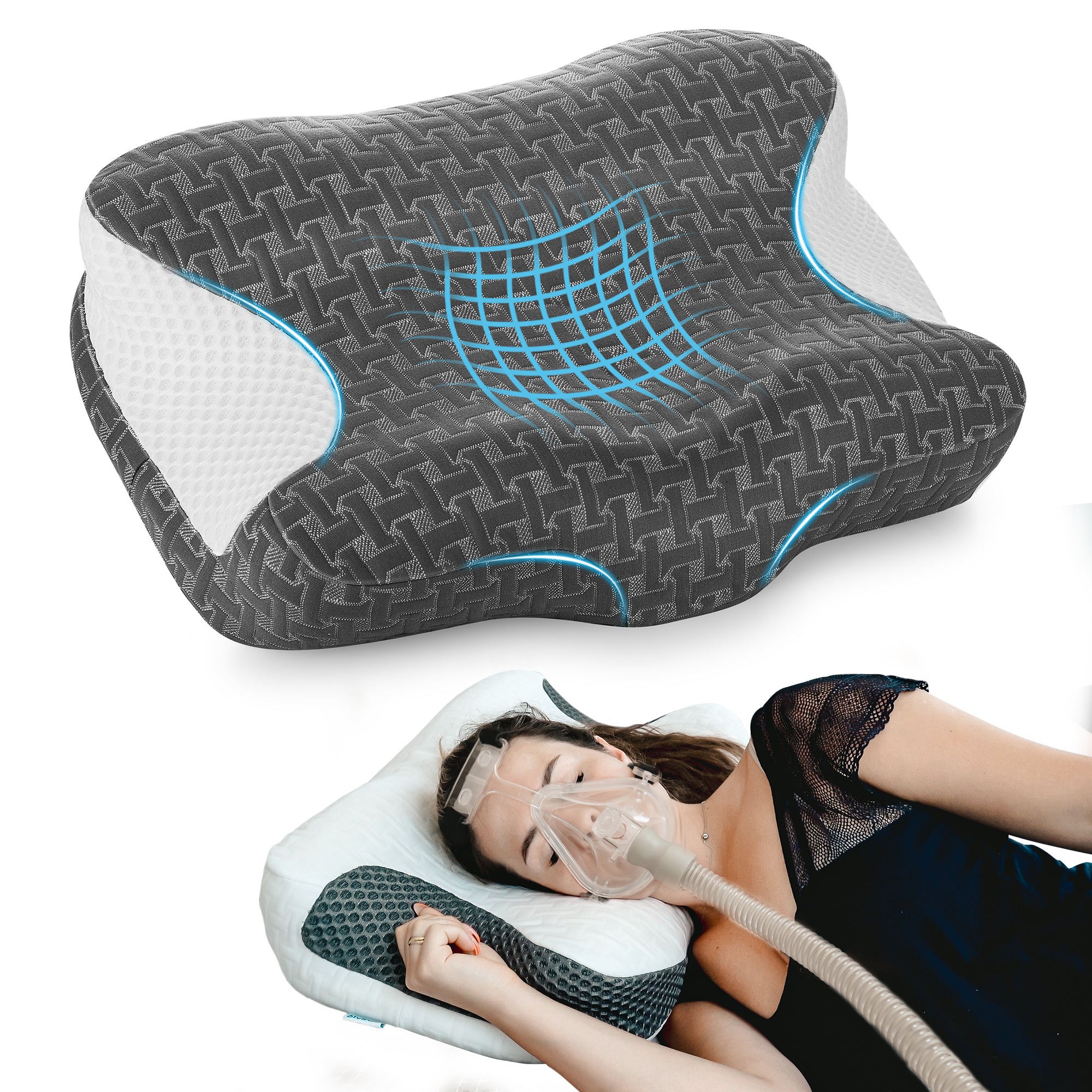
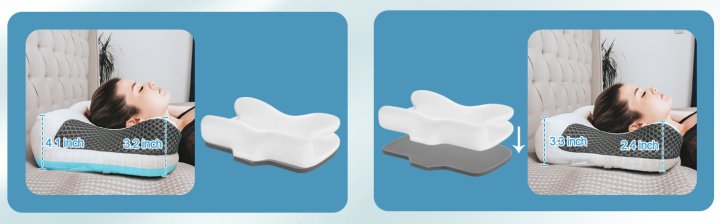
The Elviros distributor page lists the Elviros C1 Adjustable CPAP Pillow and the Elviros C2 Cooling CPAP Pillow. Ask Elviros for a written quote for your chosen model and version. The page does not confirm B2B availability, pricing, pack counts, or MOQ, so none of those should be assumed from a product listing. Elviros sells these pillows and publishes this journal.
For C2 retail specifications, verify the model details separately from supplier carton counts via this Elviros CPAP pillow buying checklist.

First order sign-off (minimal)
Do not release the first purchase order until every line below is filled. Buyer-checklist UPC decision: verified UPC if required; written N/A otherwise.
| Sign-off line | Entry | Stop condition |
|---|---|---|
| Model/version (one only) | ______ | Blank = stop |
| Item/SKU | ______ | Blank = stop |
| Ordering unit/pack (units per carton × cartons) | ______ | Blank or unverified = stop |
| UPC | ______ | Blank or mismatched required UPC holds sign-off; N/A only if buyer has no UPC requirement. |
| Cover included or separate line | ______ | Unconfirmed = stop |
| Quote validity date | ______ | Blank = stop |
| Lead time in writing | ______ | Blank = stop |
A first order carries a purchasing risk if the ordering unit/pack field is left blank or unconfirmed: without units per carton and cartons in writing, freight cost, landed cost per unit, and the receiving check cannot be verified, so the PO should not be sent. Confirming both values in writing on the quote resolves this specific risk: it fixes the pack math behind freight cost, landed cost per unit, and the receiving check. It does not remove all purchasing risk, because other freight inputs still need to be quoted and confirmed — the freight charge itself, shipment size and weight, delivery location and timing, and any surcharges or additional fees — before the total order cost is fully pinned down.
Sample approval and complete-pillow counts
Start sample acceptance before any bulk release, and treat every written criterion as a negotiated term rather than a requirement that already exists.
The buyer and supplier identify one approved sample by PO/sample ID, revision, fabric, cover closure, labeling, and packaging method, and record what “approved as representative” covers: same construction, materials, tolerances, inspection method, and pack-out as the order. Keep the written acceptance short: negotiated criteria, sample ID, date, approver, permitted minor cosmetic variance, automatic-reject functional failures, inspection point, photo and acknowledgement retention period, limitations, and the exact phrase that bulk lots must match the accepted sample within stated tolerances.
Also negotiate in writing how later changes are handled—re-sampling, written addendum, or joint sign-off—so a revision neither automatically voids nor silently preserves the prior sample.
Before raising a carton substitution, assemble one evidence packet: PO number and internal reference, carton number, seal status, expected and received SKU and quantity, lot/batch if present, date/time received, receiver, storage location, and whether the carton was opened by operations or arrived damaged.
Photograph carton labels, item labels, contents, count sheets, and any mismatched SKU, and flag affected units as “do not sell—review.” Record the supplier contact, time notified, response, and requested disposition, plus whether the buyer accepts, returns, reworks, or rejects.
State facts and requested next action only; promise no replacement timing, price, eligibility, or warehouse outcomes. Escalation is a negotiated business decision, not an automatic rule—use the packet to show expected condition, actual condition, and business impact so teams can choose the right path for that PO.
Sellable-unit math follows order purpose, not piece count. Hypothetical only: fictional PO SAMPLE-CPAP-18 carries one line for 18 complete CPAP pillows and a separate line for 6 replacement covers. The complete-pillow sellable count is exactly 18: 18 complete pillows plus 6 separately ordered covers equals 18 sellable complete pillows, never 24.
Report two columns—”complete pillows sellable: 18″ and “replacement covers on hand: 6″—and keep them separate in forecasts, allocation, returns, and substitution decisions. If a cover is later attached to complete a unit, document the conversion, consume one cover, and count one completed pillow—not a new pillow plus a free cover.
Receiving and reordering sequence
On delivery, check the seller-confirmed model and case quantity against the PO before putaway. Match the PO line to the carton label and model code, not the retail box alone. If model or case quantity differs, hold the line and photograph the label, seal, and contents.
Log discrepancies before reordering: PO number, model, expected and received case quantity, carton count, date, and photos. If sale units still total 24—say 4 cartons × 6 instead of the expected 3 cartons × 8—record it as a configuration change, not a silent substitution.
Reorder only after discrepancies are logged and resolved or acknowledged with the seller. For covers or accessories, use the matching accessory SKU only after compatibility with the confirmed model and cover setup is confirmed in writing. Keep the confirmed model, case quantity, and approved accessory SKU in the reorder note.
Receiving-to-reorder handoff
After a clean receipt, or after a discrepancy is resolved, copy the confirmed values into the reorder note: model/version, SKU, units per carton, cartons ordered, master carton dimensions, actual carton weight, cover setup, and the seller’s quote validity window. Attach the receiving photos and the completed quote comparison so the next buyer can audit the landed cost without re-asking the seller. Reorder at or above the seller-confirmed MOQ only—never assume an MOQ from this guide or any example here. If any handoff field is blank, treat the next order like a first order and rerun the sign-off.
Leave a Reply