If you’re looking for pillows for couples with different sleep positions, start with the two pillows already on your bed. Different sleep positions alone give you no reason to change a setup that feels comfortable. If either of you wants something to feel different, write down what you’d like to change before you adjust or shop.
Table of Contents
Record how each of you uses your pillow
Use one column each. On the bed you share, record your own pillow setup before you lie down for a brief check while awake. Then note how it felt and whether you want a change.
| What to record | Person 1 | Person 2 |
|---|---|---|
| Current pillow | ___ | ___ |
| Usual sleep position — Side, back, stomach, or a mix | ___ | ___ |
| Starting setup — Which side or edge is up? Is the pillow stacked or fitted with a removable layer? | ___ | ___ |
| Position used for the awake check | ___ | ___ |
| What I noticed — For example, too high, too low, or “No issue” | ___ | ___ |
| Do I want a change? — Yes, no, or unsure. If yes, what would I like to feel different? | ___ | ___ |
If either of you wants to compare pillow heights, use the same measuring method for each setup. Rune & Horn’s guide to measuring and comparing pillow loft
Try one change to your own pillow
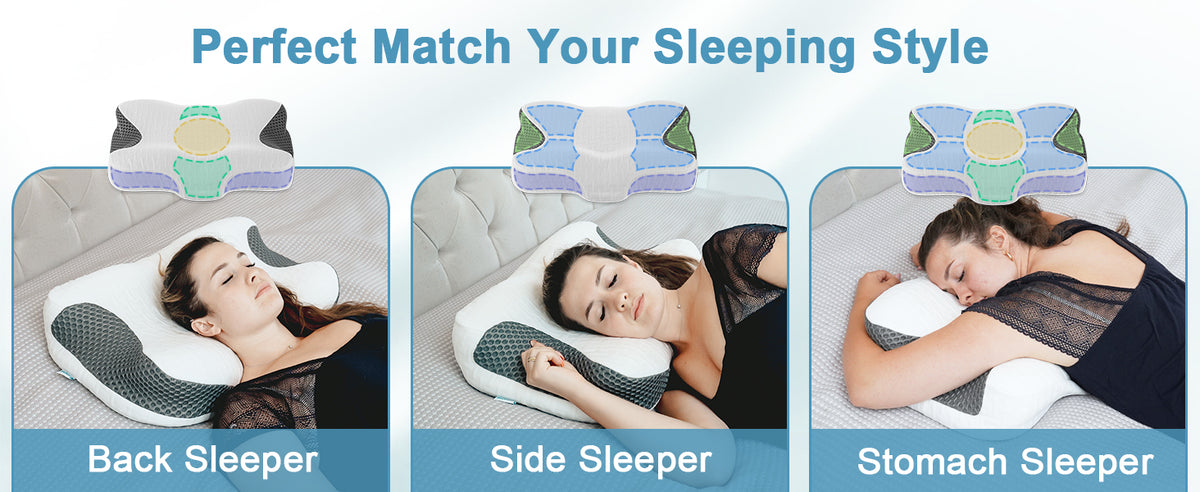
If your pillow feels fine, keep your setup. If you want a change, start from the setup you recorded and make one adjustment your pillow allows, such as rotating it to a different edge or removing a detachable layer. Lie down briefly on the same mattress, in the same position you used for your first check. Note what changed and which setup felt better, if either.
If you want to test another setting, return to your starting setup first. Stop if a setting causes discomfort. Use the comparison to record how each setup felt while you were awake. Overnight comfort is still an open question.
Compare each person with their own starting setup
Repeat the quick awake check in the same spot on the mattress, with the same bedding and body position. Record what changed before interpreting what you felt. If someone switched sides of the bed or changed the pillow and bedding together, restore their starting setup and repeat with one change. If they want a different height and feel, check each separately when the setup allows it. If both change together, record both impressions and leave the cause open.
Hypothetical trial. One partner wants their head to feel less raised during the awake check. They move to the other side of the bed, remove a folded towel from beneath their pillow, and pull the duvet up around their shoulders. Their head feels less raised, but three things changed. They return to their usual side, restore the original duvet placement and towel, then repeat with only the towel removed. In this example, the other partner stayed comfortable with their setup and noted that they wanted to keep it.
If removing the towel resolves the first person’s specific obstacle during the check, keeping the pillow is a valid decision. If the repeat leaves the source of the difference unclear, pause shopping until there’s a specific obstacle to shop for.
Check whether the same pillow setting works when you change positions
If you usually move between positions, check each position separately before deciding whether a pillow setting suits you. Use the same spot on the mattress and keep the pillow at the setting you’re testing. Settle into a position you actually use and note whether the pillow feels acceptable to you while you’re awake. Then check the other position with that same setting. If you feel tempted to change the pillow before you can get comfortable, record how it feels as it is. Leave any position you skip marked “Not checked.”
Once you’ve recorded those separate checks, try moving between the positions the way you normally would. Notice whether you can settle after the switch or whether you feel you’d need to restore the pillow’s shape, turn it over, or change its setting. Record which way you moved and what you would have to do. A pillow can feel fine when you settle into either position separately and still need reshaping after a switch. If you reshape it during the switch check, keep that note separate from your original impressions of the fixed setting.
Keep your records under your own names. If your partner usually uses a single position, they can check that position with their own pillow and setting. They don’t need to try yours or fill in a switch observation. Use a grid like this for each round, with your actual positions and the setting each of you tested written beside your name.
| Person and usual position | How it felt while awake at the fixed setting | Reset after switching |
|---|---|---|
| Combination sleeper: side | Worked / Didn’t work / Not checked | On arrival from back: Needed / Not needed / Not checked |
| Combination sleeper: back | Worked / Didn’t work / Not checked | On arrival from side: Needed / Not needed / Not checked |
| Partner: usual position only | Worked / Didn’t work / Not checked | Doesn’t apply |
“Worked” means you found it acceptable during that brief check. If side worked and back didn’t, keep both entries so you can see what the setting does and doesn’t do for you. Your partner’s result belongs to their setup and can stand on its own.
In a hypothetical example, one person finds their current adjustable pillow acceptable on their side but awkward on their back. When they roll onto their back, they want to flatten the pillow by hand. Their partner checks their usual side position and is happy with their own pillow. The combination sleeper decides to try another reversible adjustment within the maker’s instructions and repeat both position checks and the switch. The partner keeps their setup. Even without buying anything, they’ve identified which pillow is worth adjusting and what to look for when they try it again.
Compare your pillow notes before deciding what to replace
Read your notes side by side. Each of you should write one criterion you’ll use to judge an option in your usual sleep position. If you’re happy with your pillow, write down what you want to keep. Then record whether either person’s option would change the other person’s setup.
Suppose you sleep on your side and want a lower edge than your pillow offers. Your partner sleeps on their back, is comfortable, and wants to keep the height they already use. You try each other’s pillows in a brief check while awake. Your partner’s pillow feels low enough to you, but yours feels higher to your partner. Beside “swap,” record both results and write “Changes both setups.” If you decide against the swap, your partner can keep their pillow. There’s no special pairing to buy.
If your own pillow has another edge or a removable layer, testing one of those options means varying an adjustment on the pillow you already own. Record the setting you tried and whether it met your criterion during the awake check. If your pillow can’t provide the change you want and you decide to shop, use that same criterion to compare features on another model. Keep the decision tied to the person who wants the change.
Three hypothetical decisions
- Keep both pillows. Suppose one of you usually sleeps on your side and the other on your back. Both of you write “No issue,” so you keep your current setups.
- Change one setting. Suppose one of you is comfortable and the other wants a lower edge. The person who wants a change rotates their own pillow and prefers the lower edge during the awake comparison, so they choose that setting.
- Replace one pillow. Suppose one of you still wants a lower setup after trying the lowest setting their pillow allows. If that person decides to buy a replacement, they shop for their own pillow.
When to buy pillows for couples with different sleep positions
If you’re considering a replacement, use the notes from the person who wants one. What do they want to feel different in their usual position? Can their current pillow make that change? If they still want a replacement, which documented feature would help them try the setup they’re looking for?
Check whether both pillows fit across the head of the bed
If you’re keeping one pillow and replacing the other, measure the space the pair will actually use. Lay the existing pillow in its usual spot, with its cover on, and mark where you want the replacement to sit. Run a tape measure left to right across that part of the bed. Record the span between the outer limits where the two pillows can sit. If the available width varies from front to back, check where each pillow’s widest points will land.
Measure the existing pillow at its widest left-to-right points in the orientation you use it. Leave the cover in place and include any seams or bulges that extend beyond the pillow. For a contoured or irregular pillow, measure between its outermost tips on the real pillow, even if those tips are at different distances from the head of the bed. You can place a straightedge at each tip, parallel to the sides of the bed, then measure across between the straightedges. Use the same method if you have the replacement in hand.
Decide how much clearance you want between the pillows. If another item will occupy part of that same span, measure the width it takes up and include it in the total. If you’re working from a product listing, use the published dimension that would run left to right in your intended orientation. Treat it as an estimate. If the published numbers leave too little room for your measured span or you can’t tell how far the cover will extend, pause and ask for the exact overall dimensions of the chosen model with that cover fitted.
Width worksheet
- Usable span at the head of the bed = ___
- Existing pillow, covered and in position = ___
- Replacement pillow in its intended orientation = ___
- Desired clearance and width of any other item sharing the span = ___
- Space left = usable span − existing pillow width − replacement pillow width − clearance and other items
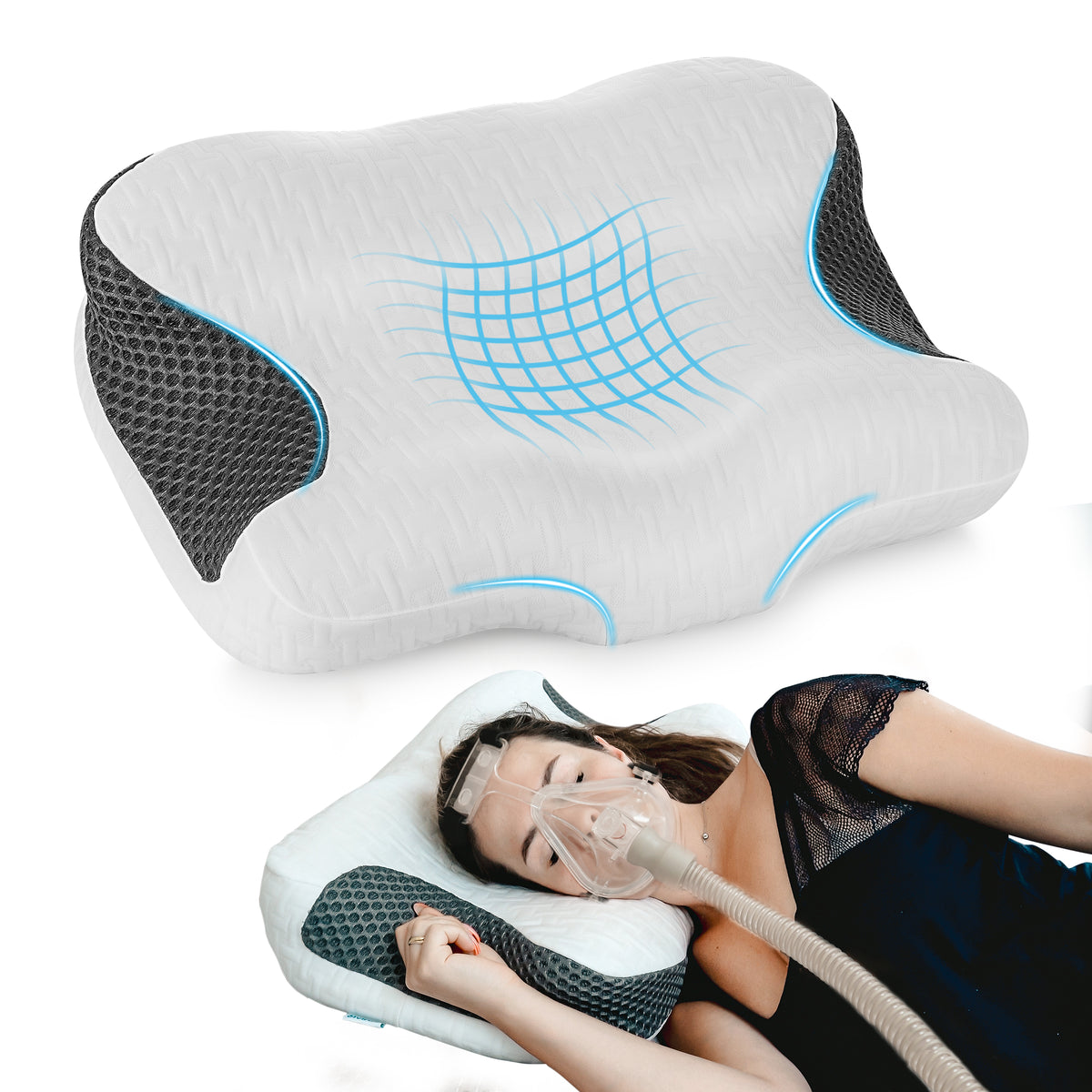
Hypothetical example. Say the usable span is 58 inches, the covered pillow you’re keeping is 30 inches wide, and you want a 3-inch gap. Elviros lists the C1’s nominal footprint as 23.6 by 16.3 inches. With the 23.6-inch side running across the bed, the estimated space used is 30 + 23.6 + 3 = 56.6 inches, leaving an estimated 1.4 inches. Use that remainder to screen for width. Confirm physical fit with both covered pillows in their intended positions. Elviros C1 dimensions
Check whether one C1 adjustment fits the documented need
- Write down one person’s criterion. Use the repeat check to name what still needs to change. Record “it feels higher” and “it feels firmer” separately. A firmer feel alone leaves the height question open.
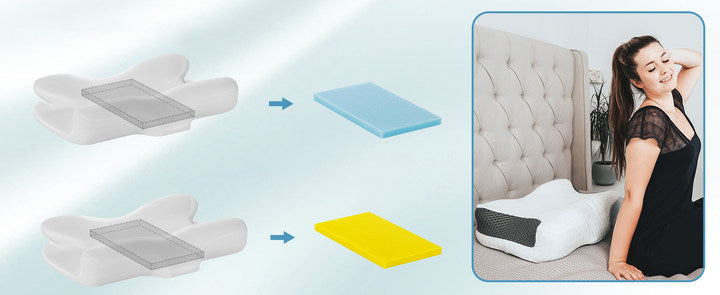
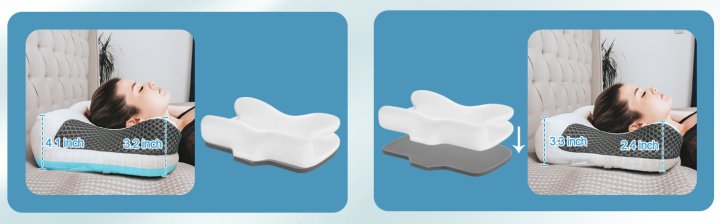
- Match the criterion to one adjustment. For a height comparison, keep the same facing edge and insert and add or remove only the 0.79-inch bottom height piece. To compare facing edges, rotate the pillow while keeping the base configuration and insert fixed. If feel is the criterion, compare the blue softer and yellow firmer inserts with the facing edge and base fixed. For any repeat awake check, use the same spot on the bed, bedding, and body position.
- Verify the exact selection before deciding. On the listing, check that the option you select corresponds to the exact C1 and verify the facing edge, base configuration, and insert your intended adjustment requires, including which pieces the selected option supplies. The listed edge heights are nominal: 3.3 and 2.4 inches without the base, and 4.1 and 3.2 inches with it. The page leaves actual height under the person’s head, perceived firmness, and overnight fit open. Consider one C1 only if the verified selection offers a specific adjustment that could address that one person’s documented obstacle. Official Elviros C1 product page
Decide whether to buy one pillow or two
When shopping for pillows for couples with different sleep positions, you may both want a change even though only one of you has a reason to order today. Each person should be able to name what they want from a replacement, what the specific item would offer, and what they would keep if they passed. One shopper might know they want a pillow that feels less firm and have a candidate they’re willing to pay to try. The other might also want a change but still be deciding what they’d prefer. In that case, leave the second purchase open.
Use one agreed spending limit for the order. If a seller hypothetically offered two units together, review the second unit against the second buyer’s own requirements before comparing prices. Ask whether that person would choose that specific item if it were listed on its own. Then ask whether its expected benefit is worth the added cost within your shared limit. Each buyer makes that judgment for themselves, even when you pay from the same budget.
| What each buyer can decide today | Order to consider | What each person gets or keeps |
|---|---|---|
| One buyer has a specific need and a candidate they’re willing to pay for. The other is still unsure what they want. | One item | The first buyer gets a replacement. The other keeps their current pillow and leaves the decision open. |
| Both buyers can say why their proposed item suits them and agree the total fits the limit. | Two items | Each gets the replacement they chose. Compare any two-unit offer with the one-item order before committing. |
| Both have candidates, but the two-item total exceeds the limit. | One item, if you agree which to buy now | One buyer gets their chosen replacement. The other keeps their current pillow for now. |
Use seller-confirmed item details and checkout totals for the options you can actually order. In this fictional example, one replacement totals $72 and two of the same item total $110. At $72, one buyer gets a replacement and the other keeps what they have. At $110, both get a replacement. The second unit adds $38, and whether it’s worth spending depends on what the second buyer would get from that specific unit. For two different items, compare the actual checkout totals, including any shipping, before ordering.
If one person orders now, save the exact item ordered and the confirmed checkout total. Note which item the other person considered, the totals you compared, and what that person still needs to decide. If they revisit the purchase, they can check the current seller details and checkout total against that dated record and use the amount already spent when reviewing the shared limit.
We sell Elviros products. Elviros C1 Adjustable CPAP Pillow
Leave a Reply