If you’re shopping for a pillow for petite side sleepers, decide what you want to be smaller. You might want a compact footprint, a lower surface where your head rests, or both.
Table of Contents
Will a Pillow for Petite Side Sleepers Fit Your Bed?
- Measure your available space. In your usual sleeping spot, measure across the bed and front to back. Account for your usual bedding, another pillow, or the space a partner uses. Write down both limits.
- Find the head-contact area. Use the maker’s diagram or instructions to see how the pillow is meant to sit and where your head would rest on your side.
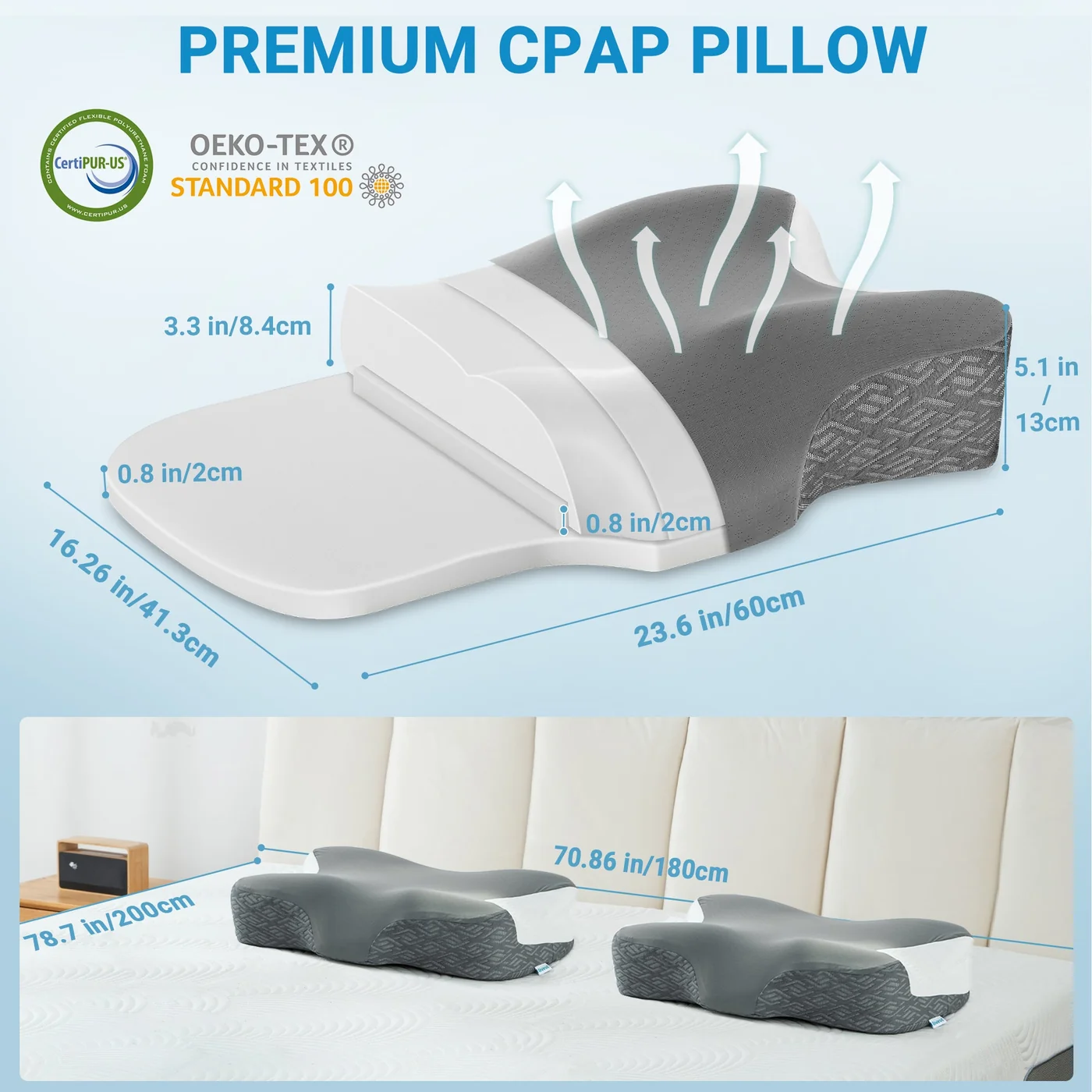
- Map the listed footprint. Confirm which dimension runs across the bed and which runs front to back in the intended placement. Mark those limits on your bed with a tape measure to see the outer envelope. For a contoured pillow, use a scaled or dimensioned diagram to locate the cutouts, wings, and intended head-contact area within that envelope. If the maker permits another orientation, map that placement too.
Find Out What the Height Measures
If you’re choosing a pillow for petite side sleepers because you want your head to rest lower, find out where and how the maker measured the listed height.
Nominal overall thickness is the listed thickness for a pillow profile. Nominal contour-edge height describes the listed height at a specific edge of a shaped pillow. If the maker allows you to turn a contoured pillow, a different edge may face you, and your head may rest farther in from that edge.
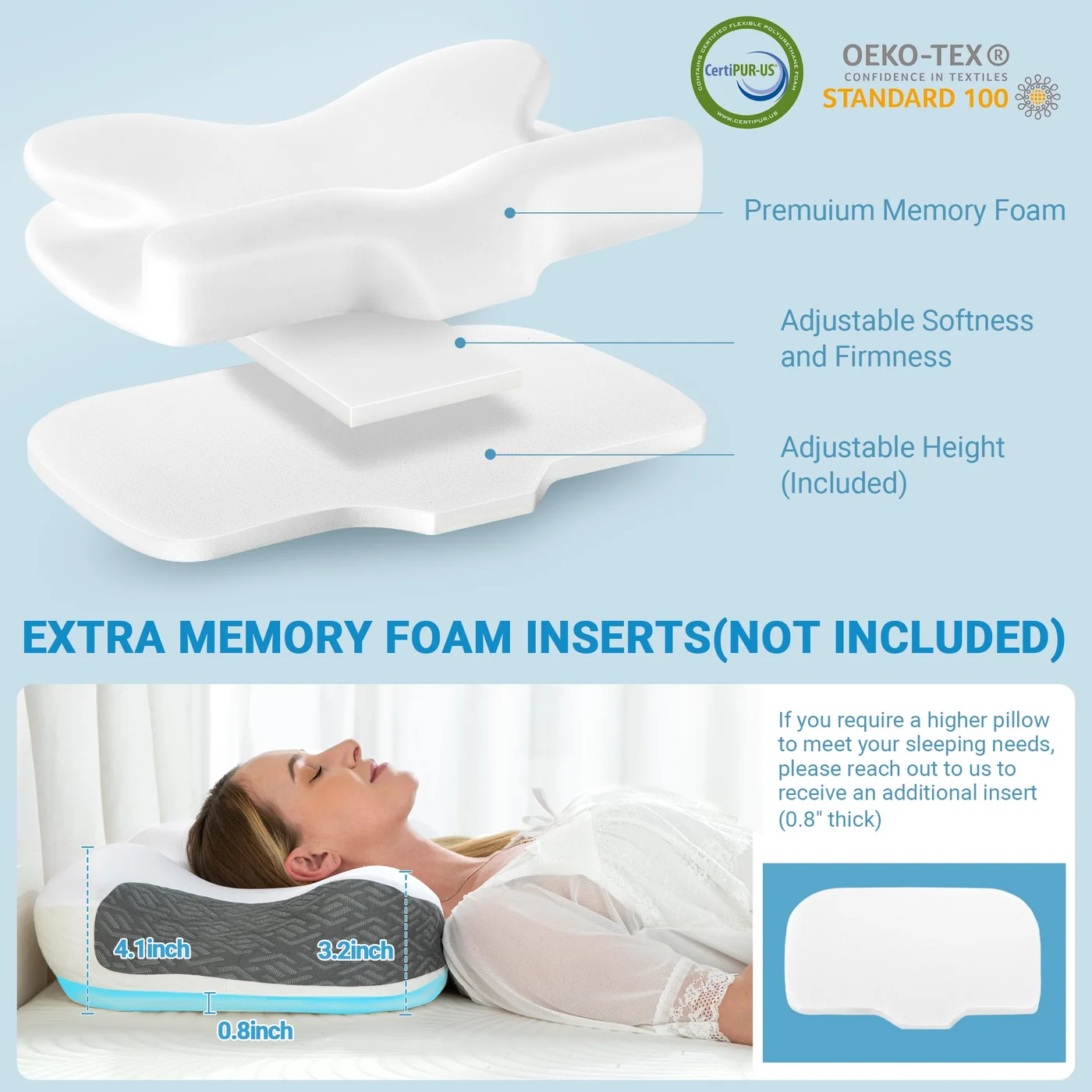
Loaded head-contact height is the height of the compressed pillow surface directly under your head, measured above the mattress while you lie on the pillow. Removable fill may let you change the loft. The height under load depends on how much fill remains, how it’s distributed, and how it compresses. A measurement under load is needed to establish the minimum loaded height.
When comparing heights, match the measurement location and conditions. If a maker confirms a height was measured at rest, identify the spot where your head rests on your current pillow, then get up and measure that area at rest. To compare how high each pillow holds your head, you need measurements under comparable load at the spot you use.
If you can compare a pillow for petite side sleepers with your current pillow, have a helper estimate how high each pillow’s surface sits above the mattress beside your head while you lie on your side. Use the same mattress and sleeping position for both checks. The surface directly under your head may compress differently, so record the result as a rough estimate beside your head and keep the loaded head-contact height marked as unknown. How to measure and compare pillow loft
Four Checks for Choosing a Pillow for Petite Side Sleepers
Apply these checks to the exact size and configuration you’d order. If you need both a smaller footprint and a lower surface under your head, check both on that same version.
- Use the space you have every night. Compare the pillow with the limits you measured on your usual bed setup. If the fit is close, allow room for the cover or case you plan to use.
- Confirm the intended placement. Check which dimension runs across the bed and which runs front to back. For a shaped pillow, confirm where its widest and deepest points fall and whether the intended head-contact area lines up with your sleeping spot. Count on an alternate placement only if the maker permits it.
- Verify what the listed height measures. Confirm where the measurement was taken, whether the pillow was at rest or under load, and which pad or fill configuration was used. If how high the pillow holds your head determines whether you’ll buy it, look for a comparable loaded height at the intended contact area.
- Check the trial and return terms. If you need to try a pillow for petite side sleepers before deciding, confirm that the exact product qualifies for a return after opening and use. Check when the return window starts, how to send it back, and what costs apply. If you’re buying by measurements alone, wait for any missing figure that would change your decision.
Compare Four Real Pillow Listings
When comparing options for a pillow for petite side sleepers, start with the listed outlines. Confirm which dimension runs across the bed and which runs front to back in the intended orientation. For any option that could fit your space, use the height column to see what the listing measures and what you’d still need to ask.
| Pillow | Listed outline | Height details |
|---|---|---|
| The Pillow Bar Pillow Petite | 16 × 20 in nominal, orientation unverified | Minimum and loaded heights are unverified. The maker markets it to young children or adults who travel. Product listing |
| Nest Easy Breather Side Sleeper | 26 × 18 in nominal, orientation unverified | Removable fill may allow loft changes. Minimum loaded height is unverified. Product listing |
| Bluewave Slim Series | 25 × 16 in nominal, Standard, orientation unverified | 3.25 in and 4 in are listed overall thickness options for specific slim profiles. Series listing |
| Elviros C2 | 23.6 × 16.3 in nominal, orientation unverified | 3.3 in and 2.4 in are nominal contour-edge heights without the pad. The listing leaves the measurement load unstated. Loaded head-contact height is unknown. Product listing |
If both a slimmer profile and a contoured model fit your bed, ask each maker for a loaded measurement where your head would rest. You’ll need comparable measurements to tell which would hold your head lower.
A Worked Example for a 24 × 17-Inch Space
Imagine a fictional pillow labeled 16 × 20 inches and a space that’s 24 inches across the bed and 17 inches front to back. At 20 inches across and 16 inches deep, the pillow fits inside that rectangle. At 16 inches across and 20 inches deep, it extends 3 inches past the available depth.
The example assumes the maker allows both placements. When you map a real pillow for petite side sleepers, check the full outline and where your head would rest in each permitted orientation. If a placement clears your bedding and lines up with your sleeping spot, use that contact area when you ask about height.
Map a Pillow for Petite Side Sleepers Before You Buy
Use short strips of removable masking tape on a spare sheet or cut an outline from paper. Start with your usual bedding in place. Lie on your side on your current pillow and note where your shoulder and the center of your head land relative to the mattress edges. Get up, move the pillow, and transfer those positions to the sheet.
Use the listed width and depth for the exact size you’d order to mark its outer envelope. For a contoured pillow, use a scaled or dimensioned diagram of that size to trace the contour, including any cutouts or wings, and locate the intended head-contact area before relying on the mock-up. Mark the shoulder-facing edge and put an X where the maker shows your head resting. Use that spot when asking for a compressed height. Slide the outline until the X lines up with your usual head position, then check where the shoulder-facing edge and wings land. The mock-up checks placement on the bed. Height and comfort need their own checks.
Imagine a fictional contoured pillow with a long wing on one side and a head recess offset toward that wing. The outline clears your bedding when centered in the available space. When you slide it to bring the recess under your usual head position, the long wing overlaps your partner’s pillow. Ask whether the maker allows another placement before turning the template and checking again.
Stop or go. If a missing dimension, edge label, or contour detail could change the result, pause the purchase and ask for a scaled or dimensioned diagram that shows it. Proceed to the height and purchase checks if the outline clears your bedding and the intended contact area lines up. If you’d need to sleep on the pillow to decide, ask the retailer to confirm that opening and sleeping on that exact item is allowed under its return terms. A retailer can offer returns for unopened items only.
What to Ask When a Listing Leaves a Fit Question Open
When you’re choosing a pillow for petite side sleepers, start with the fit question that could rule out the listing.
You need more bed space and a lower surface under your head. If a narrower pillow with removable fill clears your partner’s pillow, ask for the loaded height at the intended head-contact area with the fill you’d use. If both changes matter to you, keep the listing pending until you can verify both.
The listing gives three unlabeled dimensions. If the fit depends on which number runs front to back, ask the maker to label the dimensions on a diagram of the exact version. If the height points to a raised edge, ask for the measurement where your head would rest.
The outline fits, but the recess is out of place. If a contoured pillow clears your bedding but its recess sits too far toward the middle of the bed, ask where the recess lands in any other permitted placement. If every permitted placement leaves it outside your usual head position, rule out the pillow.
Ask the Maker About a Pillow for Petite Side Sleepers
If the listed dimensions look promising, copy this note and fill in the product link, size, and options you’ve selected. Include the SKU if the site shows it.
Copyable note for the maker
Hi, I’m considering [product link, selected size and options, SKU if shown]. Could you confirm the exact SKU for that selection and send a scaled or dimensioned diagram showing the intended side-sleeping orientation? Please label the across-bed width, front-to-back depth, the edge that faces my shoulder, any cutouts or wings, and where my head would rest.
Could you mark where the listed height was measured and tell me whether it was measured at rest or under load? If you have a loaded height at the intended head-contact area, please tell me the height above the mattress and the load applied. For each height, please specify whether the pad was installed and how much fill was in the pillow, where applicable.
Fit worksheet
If you’re comparing replies about a pillow for petite side sleepers, keep one set of notes per configuration so you can match the footprint and height to the same version.
- Product and configuration — Save the link, selected size and options, SKU, and the maker’s reply and diagram.
- Footprint and placement — Record the intended orientation, across-bed width, front-to-back depth, and where your head would rest.
- Height — Record the number, where it was measured, whether it was measured at rest or under load, the applied load if given, and the pad or fill setup.
A diagram with labeled dimensions can settle the footprint question while the loaded height stays open. A listed edge height belongs in your notes for that edge. If the maker gives a loaded height but leaves out the load or configuration, mark the missing detail and follow up if it could change your decision.
When the Elviros C2 Is Worth Checking
Start with the Elviros CPAP pillow buying checklist for dimensions and placement details. Elviros CPAP pillow buying checklist
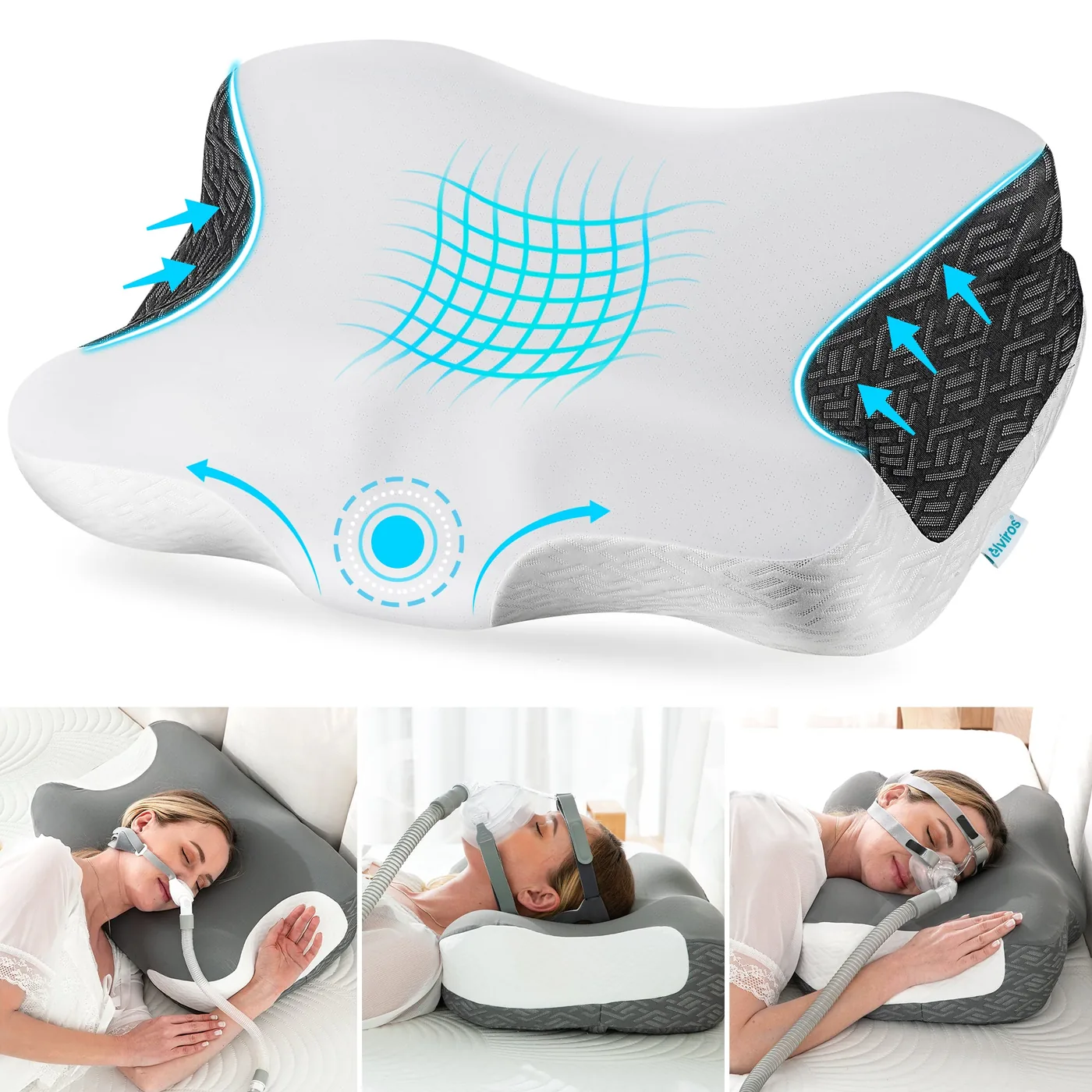
We sell Elviros products.
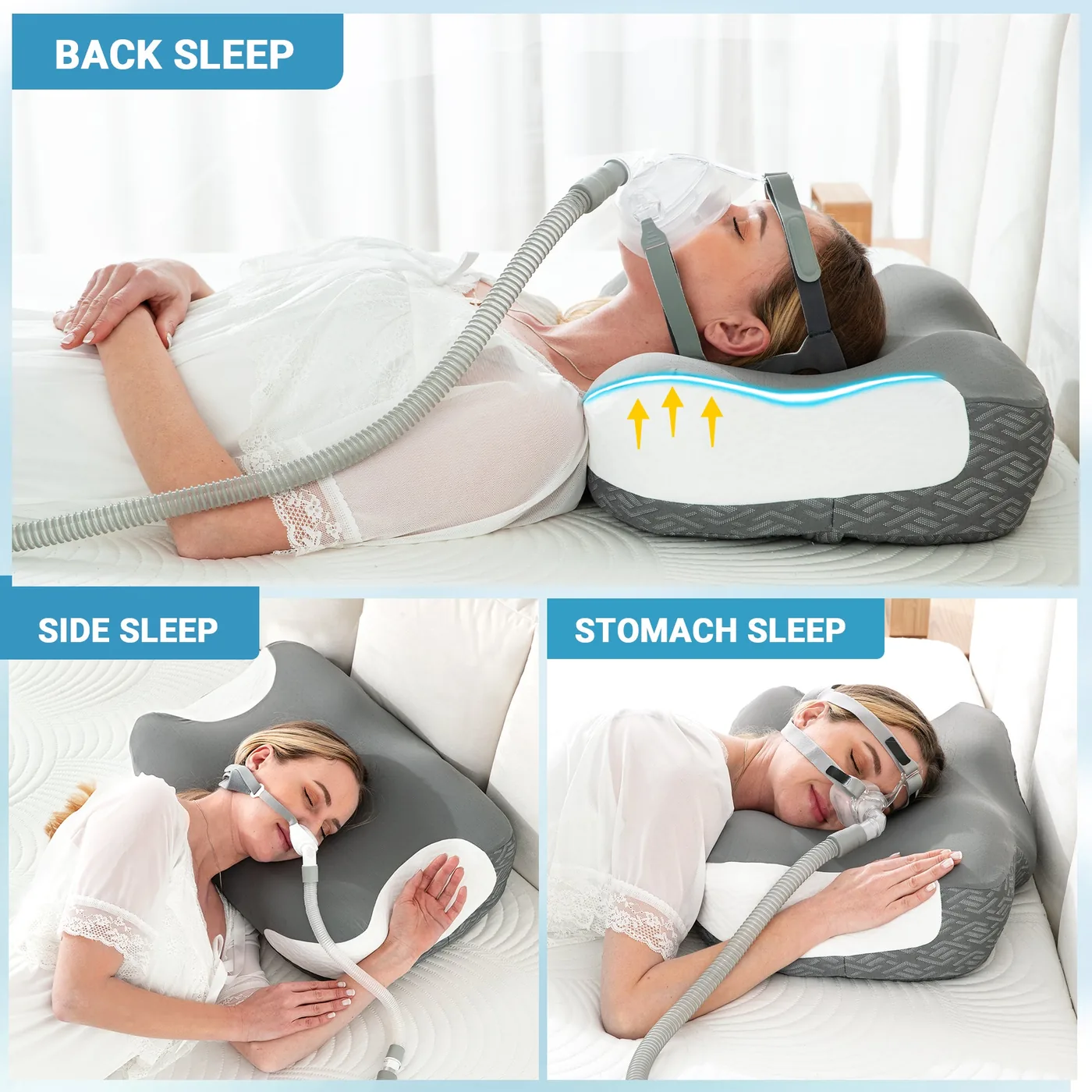
Confirm that the exact C2 size you’d order fits your space in the intended placement and has the CPAP side cutouts you want. If a comparable loaded height at the intended head-contact area is available for the pad or fill setup you’d use, check that it works for you. If that height is unknown and you need to try the pillow to decide, ask the retailer to confirm you can return the exact item after opening and trying it. Once the size and cutouts check out and either the comparable height works for you or the retailer confirms that return option for an in-home fit check, shop the complete Elviros C2 pillow.
Leave a Reply