Finding a replacement CPAP pillowcase or cover requires looking beyond standard bedding labels. Because specialized contoured pillows feature distinct shapes, cutouts, and loft profiles, a standard rectangular case or an unverified replacement cover may not align with your specific sleeping setup. Whether you are replacing a worn slip-on CPAP pillowcase or looking for a structured replacement cover, confirming exact compatibility prevents buying an accessory that does not fit your physical pillow. This article is categorized under our CPAP & Sleep Section.
Rune & Horn selected the Elviros Dark Grey memory foam pillow as a promotional product example to illustrate exterior bedding structures; please note this is not a hands-on review. Catalog specifications list its outer cover as an 85 percent nylon and 15 percent spandex blend with an inner 100 percent polyester layer, while standalone options—such as the Elviros C1 replacement pillowcase listed on the Elviros official store—describe 100 percent polyester construction. Comparing these distinct product specifications highlights why checking exact manufacturer details matters before purchasing accessories, though a material difference alone does not prove or disprove physical fit.
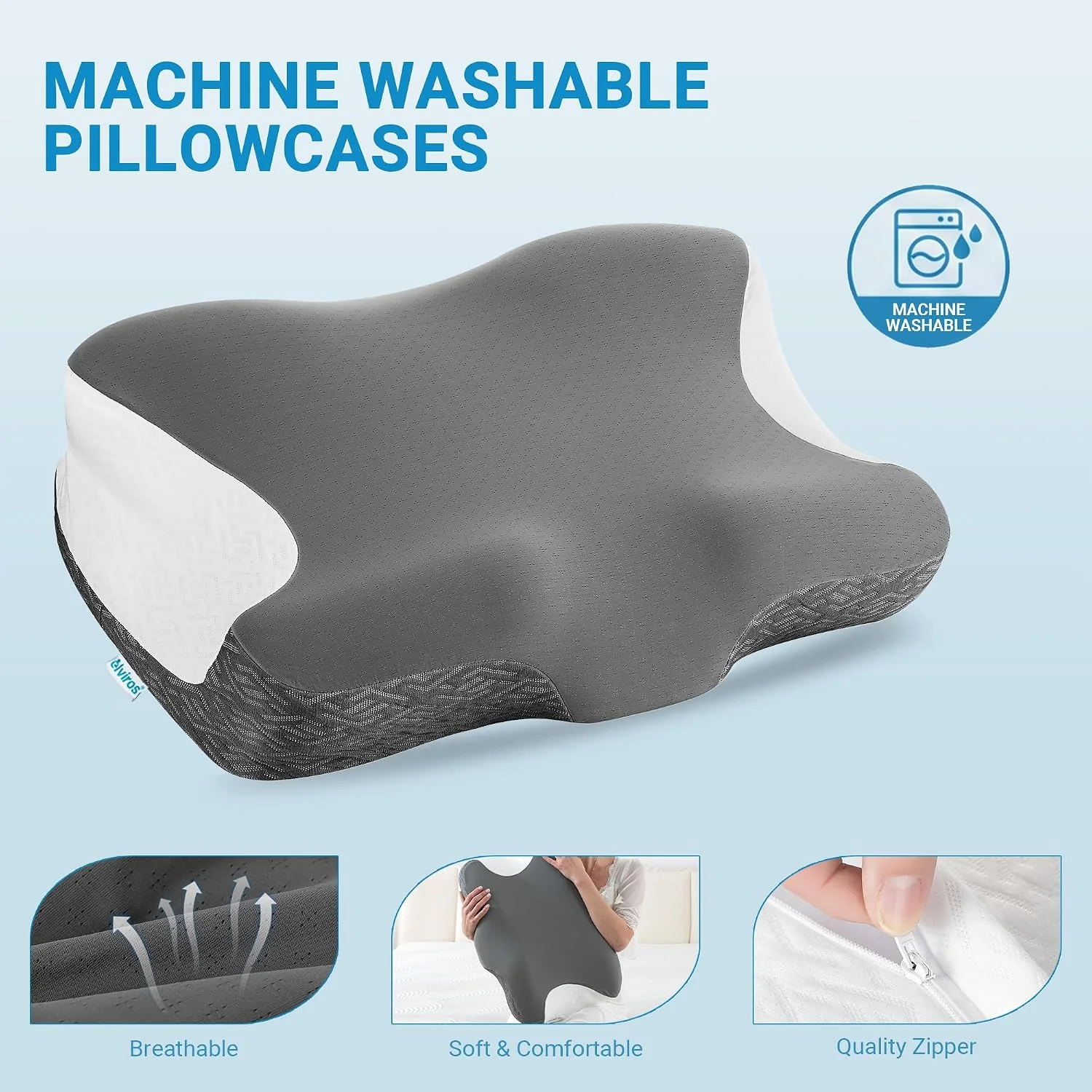
Table of Contents
Table of Contents
1. Distinguish pillowcases from replacement covers
Before ordering any bedding accessory, clarify whether you need a slip-on CPAP pillowcase or a fitted replacement cover. Manufacturers offer distinct product types for the same pillow line. For example, Contour Living lists both a CPAPMax Pillowcase and a separate CPAPMax Replacement Cover as distinct products, while legacy records such as the Contour Products CPAP Pillowcases Legacy Page reference specific catalog item numbers like 1-626-900R for the pillowcase and 1-630-501R for the replacement cover.
A slip-on CPAP pillowcase typically functions like a traditional protective sleeve that slides over the pillow body. In contrast, a structured replacement cover is offered as a distinct product SKU (stock keeping unit) sold separately from the core. Reviewing manufacturer catalog listings helps you determine which accessory type matches your current bedding components.
2. Identify your pillow shape for a matching case
Accessory compatibility depends entirely on matching the replacement item to your specific pillow model. Never assume that accessories from the same brand are universally interchangeable across different product lines. For instance, while Elviros offers a dedicated C1 replacement pillowcase described as compatible with C1 and C2 pillow models, that naming convention does not automatically confirm compatibility with other pillow variants or Amazon ASIN listings unless explicitly stated by the manufacturer.
Examine the manufacturer label attached to your current pillow or check your purchase documentation to verify the model identifier. A retail storefront title or general order description often uses broad marketing terms rather than the precise internal model designation. When checking your records, collect the brand name, exact model number, and any series revision information visible on the product label or packaging insert.
If a replacement listing only mentions a broad brand name without specifying a model number, pause your purchase until you can confirm whether the CPAP pillowcase is engineered for your exact pillow shape. Having a general brand reference without a specific model designation does not establish that a replacement cover will align with your pillow’s physical contours, cutouts, or zipper placement.
When a seller listing lacks clear model references, check the original packaging or contact the manufacturer to request clarification. Comparing the visible product label against seller documentation is a key step in evaluating compatibility.
As a hypothetical example, imagine ordering a replacement cover for a contoured pillow when your purchase history only lists a general brand name. Without confirming the specific model designation, you cannot be certain whether the replacement openings will align with your pillow’s unique contour geometry.
3. Measure dimensions and check closures
Inspecting physical dimensions and closure styles helps prevent sizing mismatches when selecting a CPAP pillowcase. Contoured bed pillows often feature irregular lofts, shoulder recesses, or central head cradles that differ from flat bed pillows. When reviewing manufacturer specifications, compare the flat length and width measurements against your pillow’s physical dimensions.
When describing pillow dimensions, note whether the seller provides flat fabric measurements or three-dimensional specifications of the assembled pillow. Pillow loft—the vertical height or thickness of the foam core—does not equate to flat fabric width. Ask sellers directly whether listed measurements describe the flat cover lying unfilled or the overall dimensions of the filled, assembled pillow.
Record length, width, and loft in consistent units, such as inches or centimeters, before comparing specifications. Measuring your physical pillow across its widest flat surface provides a baseline, but remember that flat measurements alone do not guarantee fit over contoured lofts or curved neck rolls. If height measurements are omitted from a listing, request clarification from the seller regarding maximum core thickness.
Verify how measurements were taken if a listing provides differing numbers across bullet points and image graphics. Ask the seller directly which physical object and dimensions each figure refers to rather than guessing.
Pay close attention to how the accessory secures around the pillow. Replacement covers and slip-on CPAP pillowcase options utilize various closure mechanisms, including hidden zippers, button flaps, or envelope-style openings. Verify that the closure style matches your handling preferences and fits smoothly across the pillow structure.
4. Review fabric specs and care requirements
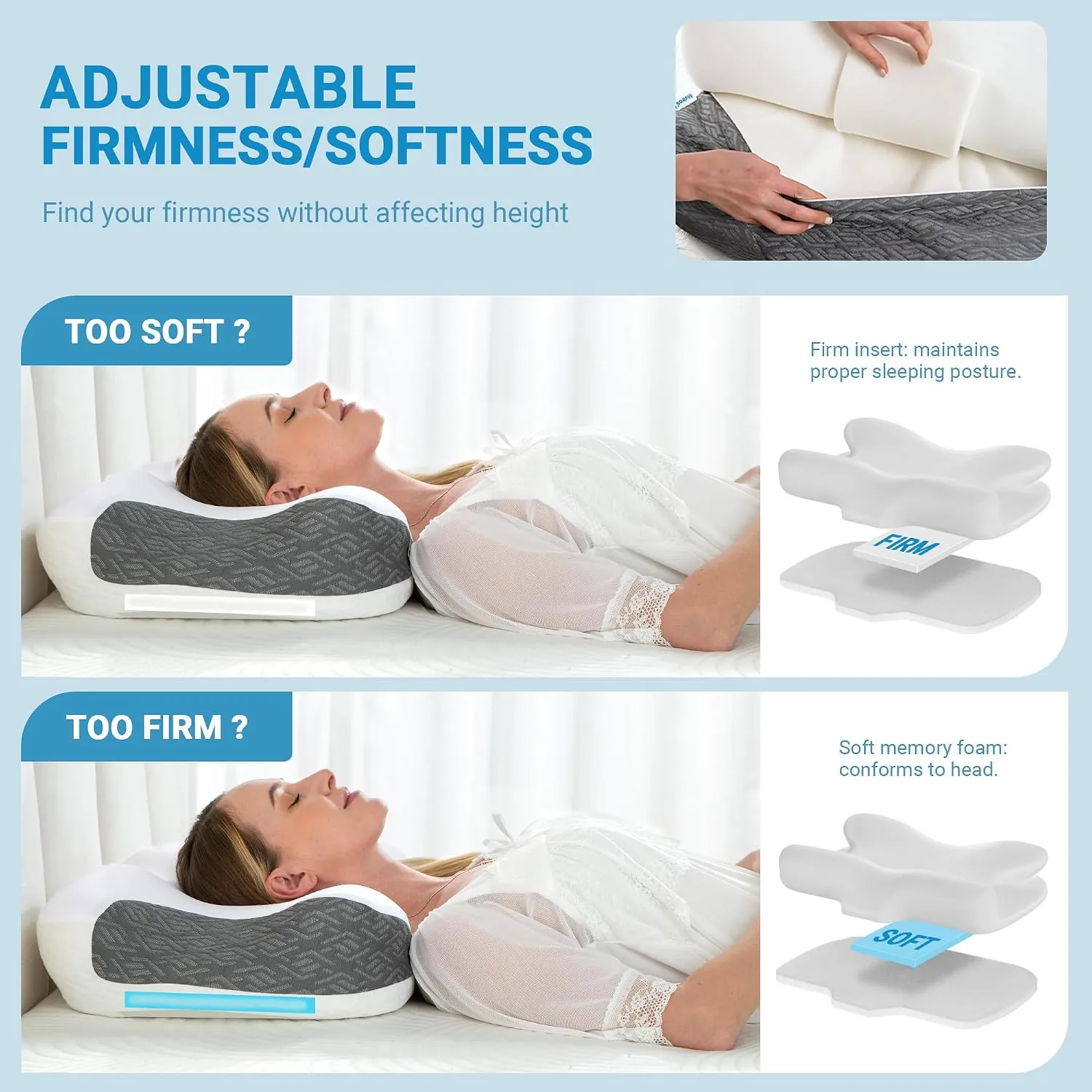
Fabric composition dictates both tactile feel and maintenance routines for your CPAP pillowcase. Replacement accessories vary in material makeup across product lines. For instance, standalone items like the Elviros C1 replacement pillowcase list 100 percent polyester construction, whereas certain Contour CPAPMax slip-on cases feature 100 percent cotton fabrics, and whole-pillow listings like the Amazon Elviros example describe an outer 85 percent nylon and 15 percent spandex blend over a 100 percent polyester inner liner.
Always locate the manufacturer’s written care guidelines for the specific replacement accessory before washing. A fabric blend that permits machine washing on one setting may require different handling than your original pillow cover. Reviewing these instructions beforehand ensures you maintain the fabric according to maker recommendations. For related bedding maintenance background, you can consult our CPAP Pillow Cleaning and Care Guide. To review earlier whole-pillow design comparisons, see our CPAP Pillow 7 Specs Comparison Guide.
As another hypothetical scenario, consider finding a replacement CPAP pillowcase online that lists “washable synthetic fabric” without stating specific care instructions or component breakdowns. Rather than assuming standard machine cycles are safe, pause to request written care details from the vendor.
5. Verify current return policies and terms
Because ordering a replacement CPAP pillowcase involves varying retailer policies regarding packaging and eligibility, checking current seller terms before completing a purchase is an essential precaution. Review the retailer’s official customer support pages or product listing details to understand what options exist if a replacement accessory arrives and fails to fit your pillow correctly.
When reviewing seller policies, record specific details such as the allowed return window, whether return shipping fees are covered by the buyer or seller, and whether opened or tried-on bedding items require original packaging intact. Note whether the vendor requires an order number or authorization code before accepting a package back.
If a product listing omits return policy details entirely, ask the vendor to confirm their return terms in writing before purchasing. Keeping a record of pre-purchase inquiries and vendor disclosures ensures you have clear documentation regarding customer support expectations.
Verify the exact policy stated on the seller’s checkout page rather than relying on general assumptions about returns or exchanges.
6. Use seller questions to confirm fit
When product listings lack critical details about shape, dimensions, or compatibility, reaching out directly to the manufacturer or seller is a practical way to request clarification. Preparing targeted, component-specific questions helps you communicate your exact requirements clearly.
You can adapt these questions when contacting a seller:
- Does this replacement accessory fit the exact model name and version of my pillow?
- Is this product a slip-on pillowcase or a fitted replacement cover?
- What are the precise flat dimensions of this cover when measured across its widest points?
- Are the listed dimensions measured from the flat fabric cover or the assembled, filled pillow?
- What type of closure mechanism does this accessory use, and where is it located?
- What written care instructions and fabric specifications apply to this exact item?
When writing to customer support, include your current pillow’s exact brand and model identifier in your inquiry. Asking whether listed numbers reflect flat fabric dimensions or filled pillow loft helps clarify sizing charts.
If a seller cannot provide written confirmation that a replacement CPAP pillowcase matches your model designation, avoid assuming fit based on similar visual photos. Requesting explicit confirmation helps you gather evidence prior to ordering.
7. Log your CPAP pillowcase fit verification record
Organizing your pillow measurements and target replacement CPAP pillowcase specifications in a structured format makes comparison straightforward. Before placing an order, record your findings to verify that every parameter aligns properly.
Logging your baseline data allows you to identify missing specifications before checking out. If a seller listing leaves a field blank—such as omitting the closure type or fabric content—mark that field as incomplete and pause until you receive clarification.
Comparing recorded dimensions against target product listings helps highlight potential discrepancies between flat cover measurements and filled pillow lofts. Using a consistent record prevents relying on memory when cross-referencing multiple accessory options.
| Field | Your current item record / requirement | Seller’s accessory record and confirmation |
|---|---|---|
| Brand and Model Name | Record brand and exact model here | Confirm exact model match from seller |
| Product Accessory Type | Record pillowcase vs. replacement cover | Confirm accessory SKU type |
| Physical Pillow vs. Cover Dimensions | Record physical pillow length, width, and loft (inches/cm) | Confirm flat cover fabric vs. assembled pillow dimensions |
| Closure Mechanism | Record zipper, button, or envelope style | Confirm exact opening style and position |
| Special Shape / Contours | Record neck roll, cutouts, or asymmetrical loft | Confirm shape compatibility with pillow contours |
| Component Package Contents | Record accessory only vs. whole-pillow bundle | Confirm whether foam core or inserts are included |
| Care Instructions | Record required fabric wash and dry rules | Confirm written care guidelines |
| Current Return Terms | Record trial, exchange, and return policies | Confirm applicable return terms on checkout page |
When logging a seller's written confirmation in your record, note the exact date of their response, the specific option or SKU variant selected on the product page, and the precise pillow model name you inquired about. A short, generic response such as a bare "yes" to an ambiguous question can easily be mistaken for model-specific confirmation if the seller was referring to a different variant or a general product line. Documenting this context ensures that a generic answer is not mistaken for a verified CPAP pillowcase match.
Consider a hypothetical scenario where you begin filling out your verification record for a contoured pillow with an unknown model designation. Because your purchase history only lists a general brand name, you must mark the model field as unconfirmed, meaning you cannot yet verify whether a replacement cover will align with your pillow’s physical contours.
Next, you inspect a replacement listing that provides numerical dimensions without stating whether they measure flat fabric or the filled pillow. Rather than assuming the numbers match, you log the ambiguity in your record table and contact the seller to ask which object and units the figures describe.
Moving to component packaging, the listing title mentions a cover, but the photo shows an assembled pillow. You use your checklist to mark the package contents as unverified, prompting you to check whether you are ordering a standalone CPAP pillowcase or a whole-pillow bundle.
When the seller fails to reply to your dimensional inquiry, your record remains marked as unconfirmed. Rather than assuming the accessory will fit, you treat the compatibility status as unknown and pause your purchase until explicit written clarification is provided.
Finally, you check the vendor’s return terms, noting that specific restocking rules are omitted on the checkout page. By recording the policy as unknown rather than assuming universal terms, you maintain a clear record of vendor disclosures before making any financial commitment.
Frequently asked questions and product details
Are replacement CPAP pillowcases universal across different brands?
No, replacement covers and CPAP pillowcases are not universal. Contoured bed pillows feature unique dimensions, loft heights, and cutout geometries tailored to specific manufacturers. A cover designed for one brand’s ergonomic shape will not automatically fit another brand’s pillow accurately. Always verify model-specific compatibility before purchasing any replacement accessory.
Can I use a standard rectangular bed pillowcase as a CPAP pillowcase?
A standard rectangular pillowcase is shaped for traditional flat bedding and is not custom-engineered as a dedicated CPAP pillowcase. When inspecting your bedding, evaluate whether a standard case accommodates your pillow’s specific cutouts and openings without restricting its intended layout.
Does the Elviros C1 replacement pillowcase automatically fit the Amazon ASIN whole-pillow example?
The Elviros C1 replacement pillowcase listed on the official Elviros site specifies 100 percent polyester construction for C1 and C2 models, whereas the promotional Amazon ASIN example (B0DQCYQV6H) references an outer 85 percent nylon and 15 percent spandex blend with an inner polyester layer. Because our sources do not establish exact cross-compatibility between these distinct items, material comparisons alone do not prove a match or non-match. Always request exact model confirmation from the seller.
What is the difference between a CPAP pillowcase-only listing and a whole-pillow bundle?
Replacement covers and CPAP pillowcases are standalone textile accessories. Review product labels and seller package contents carefully to determine whether an item includes only the fabric cover or a complete whole-pillow bundle.
How do I confirm the correct closure type for a CPAP pillowcase?
Review product descriptions and listing details to identify whether a CPAP pillowcase uses a zipper, buttons, or an open envelope design. Visual photos do not serve as standalone compatibility proof; ask the seller which closure mechanisms are present and ensure you do not open unauthorized internal layers.
To inspect current product details, customer photos, and available packaging information for the whole-pillow example discussed in this guide, you can view the Elviros Dark Grey memory foam pillow on Amazon.
Evaluating Insufficient Seller Replies: A Practical Teaching Scenario
To understand how pre-purchase verification works in practice, consider a hypothetical, non-verified teaching scenario involving a fictional inquiry for a hypothetical accessory SKU, Model A-Cover. Suppose you send a pre-purchase message asking whether Model A-Cover fits a contoured pillow, and the seller replies with a generic statement: “Yes, this cover is designed for standard ergonomic memory foam pillows and features a washable fabric shell.”
This generic reply remains insufficient for your verification record and cannot be entered as a confirmed match for several key reasons:
- Unverified Model Specificity: The phrase “standard ergonomic memory foam pillows” is a broad marketing category, not an exact model designation or serial code confirming alignment with your specific pillow’s cutouts and loft geometry.
- Ambiguous Component Scope: Stating that the “fabric shell is washable” fails to clarify whether the statement applies exclusively to the outer removable case, an internal protective sleeve, or any modular height inserts.
- Undeclared Dimension Criteria: The reply omits whether flat fabric measurements or assembled, filled pillow loft dimensions were used to test compatibility.
Because this vendor response leaves the model compatibility field and component care rules ambiguous, your research log must keep those parameters marked as Not confirmed. Instead of accepting a bare assurance, the necessary next step requires issuing a targeted follow-up question to the seller: “Does Model A-Cover match the exact dimensions and cutout layout of our specific pillow model, and do your written care instructions distinguish between the outer cover and internal foam?” Documenting this distinction ensures you do not mistake a generic marketing reply for verified pre-purchase compatibility.



 English
Leave a Reply