If you’re asking how often to replace pillows, here’s the direct answer: check your pillow maker’s guidance, then check the pillow’s current condition. There is no universal deadline. Intervals offered by sellers vary, and they are general estimates — not countdowns you must obey.
Table of Contents
For scale, Marriott’s bedding store labels 18–36 months as a general estimate for a typical pillow, and Casper’s guide gives different windows for different materials. That context is useful, but your own inspection matters more than any calendar.
How Often to Replace Pillows: Daily vs. Spare Pillow Timing
Picture one bed with two pillows that get different jobs. Pillow A is the nightly pillow: it is used for most sleep, carried to the sofa during a movie, and occasionally shared with a guest. Pillow B is the spare: it waits in the closet, comes out when the main pillow is airing, and may be used only a few nights a month. Even if both pillows were bought on the same day, their “used time” is not identical, so the date should be a prompt to compare condition, not a countdown that ends by itself.
Write the purchase date or first-use date where you will see it during ordinary linen changes. Keep one short note for each pillow: original shape, current shape, and anything that changed after washing or drying according to the label. If the pillow started as a molded block and now looks settled at the top edge, say that. If it started loose and now clumps in the hand, say that. Avoid scoring systems; a few plain lines are enough.
For inspection, keep it tied to real use. Look when changing the pillowcase, after a spill, or when the pillow returns from storage. Note stains, odor that remains after the label-safe clean, flat spots that do not relax, lumps that do not redistribute, and cover damage that exposes fill. Do not schedule a mandatory inspection or set a replacement date from the calendar. Marriott gives a range of 18–36 months for pillows under typical household use, depending on use and care.
The decision point is simple: compare today’s shape and feel with the note about the original shape, then ask whether the pillow still supports the way you actually sleep.
Why the numbers vary so much
A pillow’s useful life depends on what’s inside it, how it’s cared for, and how it’s used. A loosely filled down-alternative pillow behaves nothing like a solid molded memory foam core, so any single number applied to both is a rough average, not a promise. Treat published intervals as background, and let the condition checks below drive the decision.
Step 1 — Identify what you’re checking
Loose-fill pillows (down, feather, synthetic clusters)
- Fill can shift or clump, creating hollows or dense spots. Fluffing and reshaping — where the maker allows it — can even things out.
- Use only care the manufacturer permits. Some fills allow machine washing; many don’t, and a washable cover does not mean a washable body. Check the label before anything wet.
Solid-core pillows (molded memory foam, latex)
- The shape is the product. A cervical contour, shoulder curve, or differing edge heights are often intentional molding, not damage.
- Compare the pillow’s current shape with the profile you remember when it was new. Look for new asymmetry or a change in how it supports you on the same mattress, and follow the care instructions for your exact core.
- Read the cover and core instructions separately, and treat each only with the methods those instructions allow.
Find the care instructions by layer
Start from the outside and move inward only as far as the maker designed the pillow to open. An ordinary removable pillowcase is the first layer; it usually has its own tag and is changed for laundering. If there is a separate protector, treat it as its own item with its own label rather than assuming it follows the pillow’s rules.
When the manufacturer provides a removable zip cover, that cover is a real layer with its own instructions; note whether the zipper is meant for cover removal only. Inside that, many pillows have a sewn inner casing and loose or bonded fill. If the inner casing is sewn shut, stop there. Do not cut a seam, puncture a shell, or pull out fill to reach a label.
Use this plain checklist for a used or unlabeled pillow. Look on the pillowcase hem, protector tag, zip-cover seam, and any paper insert that came with the bed or bedding set. Search the maker’s site with the exact model name plus “care,” “cover,” and “replacement cover.” Check retailer order history for the listing title, option name, and model code. If the item was a gift or resale, ask the previous owner for a photo of the original tag before experimenting. When instructions conflict, follow the pillow maker’s label for the whole pillow and the separate label for each removable cover or protector.
Keep the boundary practical: removable means the maker gave you a designed opening. A zipper on a replacement cover does not authorize opening a sealed foam shell. If the care route cannot be confirmed, choose the gentlest action that is explicitly allowed for that exact layer, and leave sealed construction closed. Record what you confirmed and where, so the next wash or replacement decision does not depend on memory.
Step 2 — Rule out a new sleep setup
Separate two situations before blaming the pillow:
- Same bed, fresh change: nothing else in your setup changed, and the pillow now feels flatter, lumpier, or less like itself than your memory of it. That is a cue to inspect the pillow, not proof of the cause.
- Different mattress or setup: a new mattress, topper, or sleep position changes how a pillow sits and feels. Test the pillow on a familiar setup before deciding it’s worn out.
Step 3 — Cover first, then body
If the cover is designed to be removable, take it off. Inspect the cover on its own. Inspect the body on its own. Then decide.
| # | Outcome | What you observe | What to verify | Action |
|---|---|---|---|---|
| 1 | Keep / care | Body matches your known baseline; cover intact; ordinary use marks only | Maker-permitted care steps and fluffing instructions | Fluff, air, or clean exactly as the label allows |
| 2 | Replace compatible cover | Body feels as before; only the removable cover is worn (pilling, thin spots, failing zipper) | Exact model name and size label so the cover option matches | Order the matching cover for your confirmed model |
| 3 | Replace whole pillow — or ask the seller | Body cracked or crumbling; a dent that is new versus your baseline; persistent odor after permitted care; or you’re unsure | Original specs and your condition notes; seller support if damaged or ambiguous | Replace, or contact the maker before spending anything |
Hypothetical examples (illustrations, not real customer stories)
- Loose fill: Suppose a polyester-cluster pillow is fluffed daily, yet one end stays hollow while the other stays dense. If the instructions permit it, try one permitted reshape or reset, then re-check the fit and support. If clumping persists after permitted care, the pattern points toward Outcome 3.
- Solid molded foam: Suppose a cervical pillow keeps its familiar support, but the removable cover’s zipper sticks. If the fit and feel are still familiar and the contour matches the original shape, a cover-only approach may be reasonable. That’s Outcome 2 territory, walked through below.
- Uncertain case: Suppose a foam pillow shows a dent you don’t remember. Compare it to your original known condition and the maker’s specs. If you can’t tell new wear from original molding, treat it as Outcome 3 and ask the seller before replacing anything.
Worked example: replacing only the cover on an Elviros S1
We sell Elviros products.
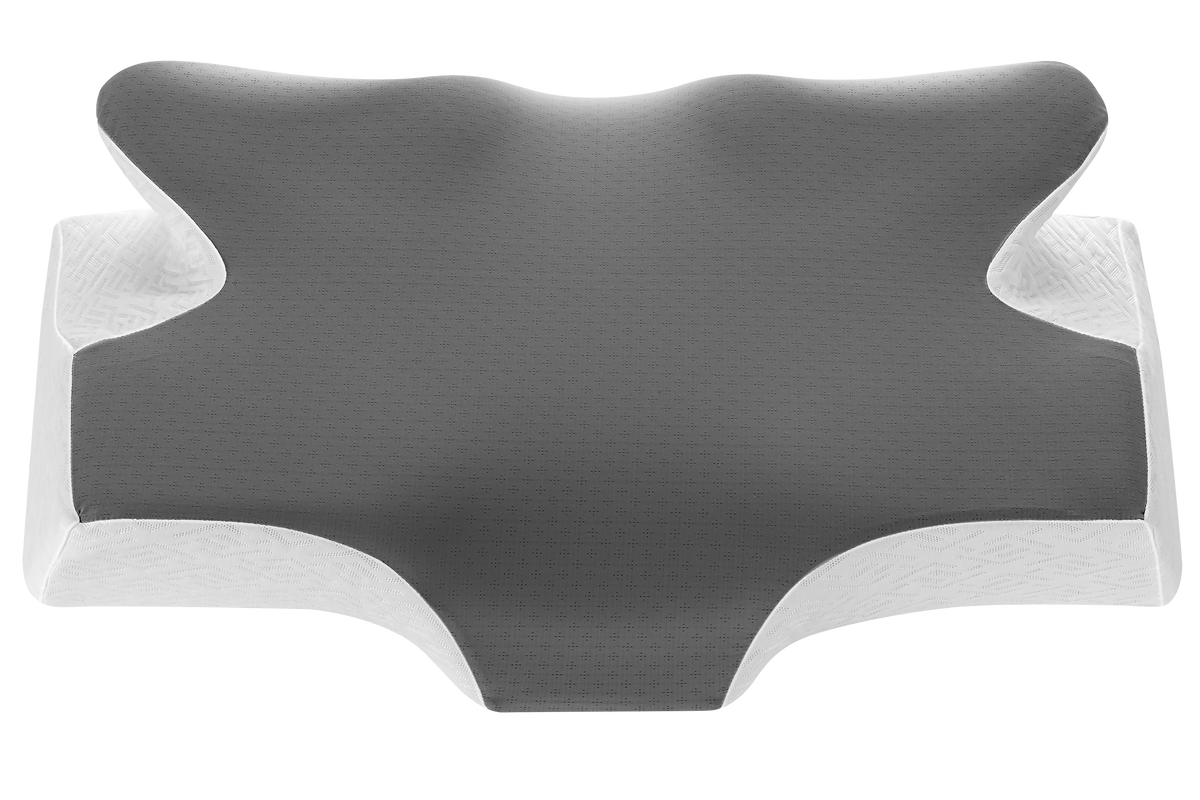
Suppose (hypothetically) you own an Elviros S1 cervical neck pillow, the body still feels as it always has, and only the removable cover is worn. Then:
- Use the model and size shown in your order confirmation or order details, and check the pillow’s tag if it has one. If the details disagree, verify the model and size on the selected listing or ask the seller before ordering.
- Match that label to the official cover option — 26L × 16.5W × (4.3–5)H inch or 28L × 16.5W × (4.45–5.23)H inch. These are the listing’s option labels, not measurements taken from a loaded pillow.
- Order the matching cover: Elviros breathable pillowcase for the S1 — cover only. Confirm the listing is cover-only and that your model and size option match before ordering.
- If you cannot confirm the model or the size option, don’t order — ask the seller first.
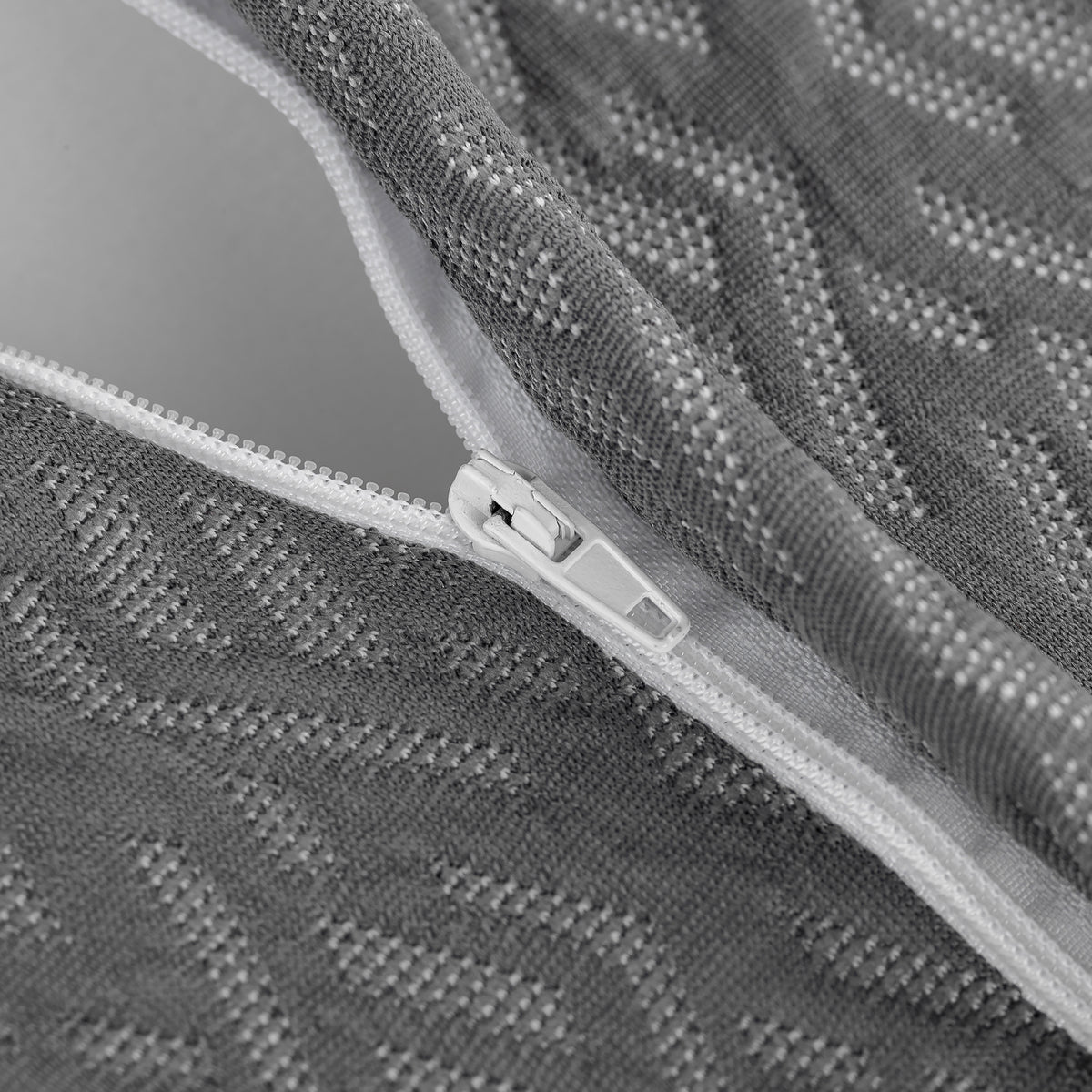
Two reminders for molded foam: different existing contour edges can be part of the original molded shape, and any dent that seems new should be compared to the original known condition and specs. If it’s unclear, ask the maker.
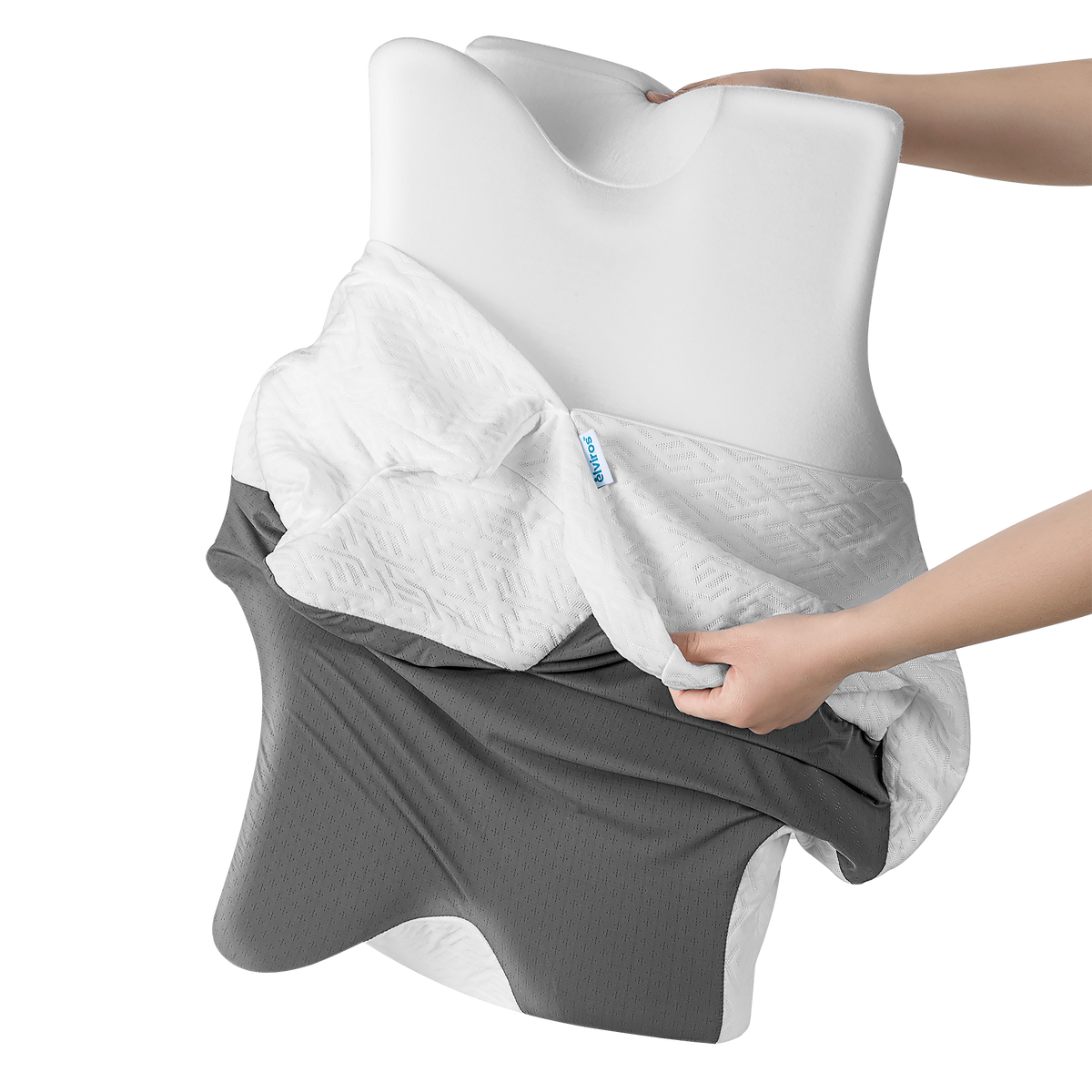
Compare S1 order records before choosing a cover
Treat S1 cover dimensions as listing options, not as measurements of the fabric or of a loaded pillow. The exact official cover-only labels are 26L × 16.5W × (4.3–5)H in and 28L × 16.5W × (4.45–5.23)H in. Read the length first, then confirm that the model, size, and cover wording all describe the same replacement cover.
Suppose order A lists an S1 pillow, 26 in, and order B lists an S1 with no size shown. Order A may match the 26 in cover option, but only after comparing the exact maker label; order B must check the order details or ask the maker. The replacement listing is the separate place to confirm the cover itself, and the original whole-pillow order may simply say foam.
Template: “Hello — I’m checking an S1 replacement cover order. Does this listing option include only the cover, with no pillow or foam insert? Which official cover-only label applies: 26L × 16.5W × (4.3–5)H in or 28L × 16.5W × (4.45–5.23)H in? Please confirm the model and size on the label I should match before ordering.”
If the model and size do not agree across the order record, listing option, and reply, pause the purchase. A matching cover-only label can help you buy the intended cover; it does not restore worn foam and should not be described as a repair for a failed pillow.

If the whole pillow really is done
Skip cover shopping and start with loft — the height and shape that fit how you sleep — using our existing guide: How to Measure and Compare Pillow Loft.
If you suspect a defect, you can ask the seller about it before replacing the pillow. Note the model, size, seller, order date (and include the receipt if you have it), when you first noticed the issue, which part is affected, and what care steps you’ve already tried. Include one photo of the whole pillow and one close-up of the issue.
Elviros’s limited warranty lists normal wear and comfort preference among its exclusions.
Decide the whole pillow after wear or preference changes
Start by separating two questions: has the pillow worn out, or have you changed what you want from the same bed? Wear evidence is specific: the surface no longer returns after ordinary use, the fill stays shifted after you redistribute it by hand, seams or casing are failing, or the allowed cleaning no longer refreshes the layer you can wash. A changed preference is different: the pillow may still be intact, but you now want a different height, feel, size, or cover compatibility for the same sleep position.
When replacing a pillow, carry over the height, feel, and shape you liked while changing only the trait that prompted the swap—for example, keeping the same loft and softness but moving from a foam fill that went flat to one that holds its shape. Confirm cover compatibility separately by exact model and size, since a cover sized for one model will not necessarily fit another.
Two partners could have pillows of the same age and make different choices. One might replace theirs because it no longer gives them the support they want, while the other might keep theirs because they still like the lower feel.
FAQ
Is discoloration a sign I must replace my pillow? Not by itself. Discoloration or reduced comfort is a prompt to inspect and follow permitted care — not a diagnosis of failure. Check the body against your baseline and the maker’s guidance.
Can I wash any pillow to refresh it? No. Use only care the manufacturer permits. Many covers are washable when bodies aren’t, and some fills can’t be machine washed at all.
Does the fold test work? The Marriott bedding guide describes the fold check for down or down-and-feather pillows, and Casper’s replacement table puts it in the down row. For a solid core, compare its current shape with the shape you remember when it was new. Look for changes such as a new dip or one side sitting lower than it used to.
Are seller replacement intervals deadlines? No. Intervals offered by sellers vary and are general estimates. Maker guidance plus your own condition check decides.
Leave a Reply